How to Choose the Right Trailer
Buying a trailer isn’t something most people do every day, so it’s completely normal to have questions. From choosing the right trailer type to understanding towing limits, payloads and whether it’s worth buying new or used, there are plenty of decisions to make before you commit.
The good news is that finding the right trailer is usually much simpler than people expect.
At Cutlers, we’ve helped everyone from first-time buyers and weekend hobbyists to farmers, builders and transport professionals find car trailers that suit the job they’re doing, not just the specification on paper. Over the years, we’ve found that asking the right questions at the start almost always leads to the right choice.
This guide brings together everything you need to know before buying a trailer. We’ll explain the different trailer types, highlight the mistakes first-time buyers often make and help you understand which features really matter, so you can buy with confidence.
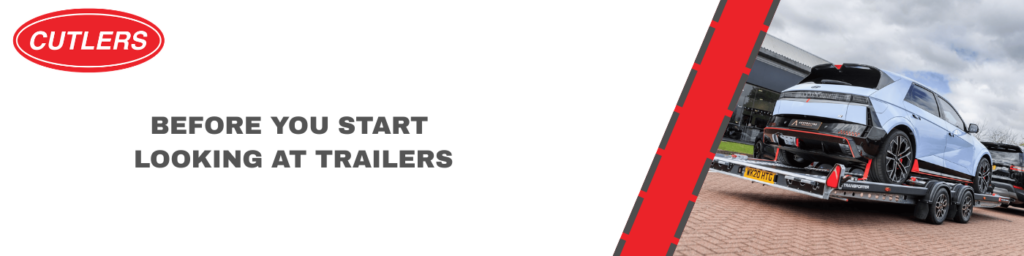
It’s easy to jump straight into comparing trailer sizes, brands and prices, but the best place to start is with the job you need the trailer to do.
A trailer that works perfectly for transporting a classic car won’t necessarily suit moving a mini digger, and the best livestock trailer is very different from the right choice for carrying tools or building materials. Rather than asking “Which trailer should I buy?”, ask yourself “What am I going to use it for?”
Those answers will narrow your options much faster than comparing brochures or specifications.
Start by asking yourself:
- What will I be transporting?
- How heavy will the load usually be?
- How often will I use the trailer?
- Will I need to protect the load from the weather?
- How will I load and unload the trailer?
- What vehicle will be towing it?
Cutlers Tip: Many buyers begin by looking at manufacturers or searching for the biggest trailer within their budget. In reality, choosing the right type of trailer first makes every other decision much easier.
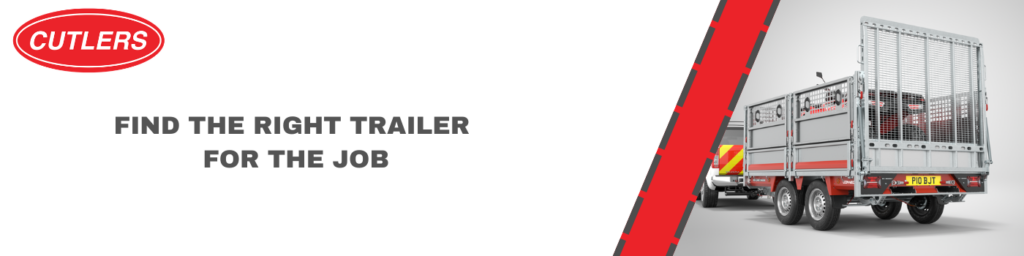
If you’re not sure where to begin, this quick guide will point you in the right direction. Don’t worry about choosing a specific manufacturer just yet; at this stage, it’s more important to identify the trailer type that best matches how you’ll be using it.
| If you need to… | A good place to start |
| Transport horses safely | Horse Trailers |
| Move cars or other vehicles | Car Trailers |
| Carry excavators or heavy machinery | Plant Trailers |
| Keep tools or equipment secure | Box Trailers |
| Transport aggregates, soil or waste | Tipper Trailers |
| Carry pallets, building materials or oversized loads | Flatbed Trailers |
| Tackle everyday jobs around home or work | Utility Trailers |
| Move general cargo with flexibility | General Purpose Trailers |
| Transport livestock | Livestock Trailers |
| Work off-road on farms or estates | ATVs and UTVs |
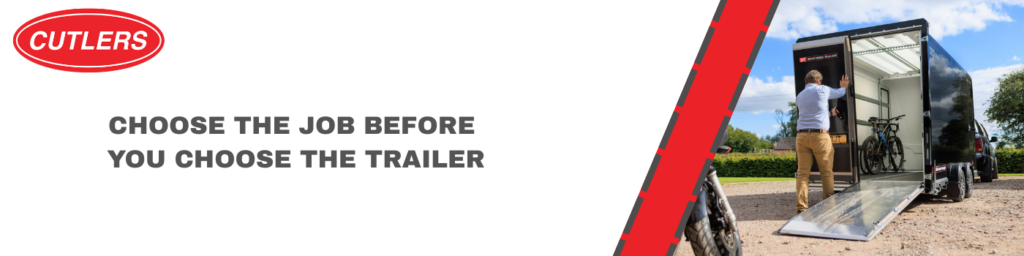
One of the biggest misconceptions we come across is that buying a trailer starts with choosing a manufacturer or deciding on a size. In reality, those decisions usually come later.
The best starting point is understanding exactly what you’ll be transporting and how you’ll be using the trailer. Once you’ve answered those questions, you’ll often find that only a handful of trailer types are genuinely suitable.
For example, if you’re transporting a vehicle, a dedicated car trailer will almost always offer a safer and more practical solution than trying to adapt a flatbed or general-purpose trailer. Likewise, if your equipment needs protecting from the weather or theft, an enclosed box trailer is likely to be a much better investment than an open design.
Thinking about the job first helps you avoid paying for features you don’t need while making sure the trailer will continue to work for you in the years ahead.
Cutlers Tip: Don’t just think about today’s job. If you expect your work or hobbies to grow over the next few years, choosing a trailer with a little extra capacity or flexibility can save you from upgrading sooner than expected.
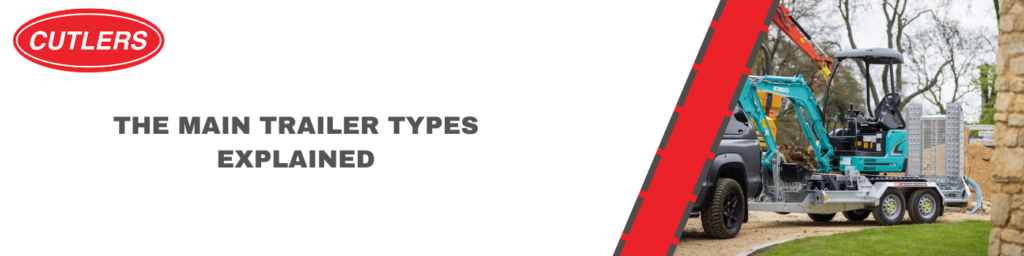
Now that you’ve narrowed down how you’ll be using the trailer, it’s time to look at the different options available. Each trailer type has been designed for a specific purpose, and understanding those differences makes choosing the right model much easier.
Rather than trying to compare every trailer on the market, start by identifying the category that best suits your day-to-day needs.
Horse Trailers
Designed specifically for transporting horses safely and comfortably, horse trailers include features such as partitioned stalls, secure loading ramps and carefully balanced weight distribution. They’re the obvious choice for leisure riders, competition yards and professional equestrian businesses.
If horse transport is your priority, explore our range of horse trailers, including models from trusted manufacturers such as Cheval Liberteand Equi-Trek.
Car Trailers
Whether you’re moving a classic car, race car or everyday vehicle, a dedicated car trailer provides the loading angles, securing points and stability needed for safe transport. Open car trailers are popular for regular vehicle transport, while enclosed models offer additional protection during longer journeys or when transporting higher-value vehicles. Explore our car trailers to compare the different options available.
Plant Trailers
Plant trailers are built to carry heavier loads such as excavators, dumpers and construction equipment. Reinforced chassis, robust ramps and higher payload capacities make them well suited to construction, landscaping and agricultural work.
If you’re transporting machinery regularly, a purpose-built plant trailer will usually offer greater durability and safer loading than adapting another trailer type.
Box Trailers
One of the most versatile trailer types available, box trailers are ideal when your load needs protection from the weather or additional security during transport.
They’re commonly used by tradespeople, event companies and businesses carrying valuable tools or equipment, but they’re equally useful for domestic jobs where keeping cargo enclosed is a priority. Take a look at our range of box trailers to see the different sizes and configurations available.
More trailer types to explore
Depending on how you’ll be using your trailer, you may also want to consider:
Tipper Trailers for transporting soil, aggregates and loose materials.
Flatbed Trailers for oversized loads and machinery that benefit from unrestricted side access.
Utility Trailers for general household, gardening and maintenance work.
General Purpose Trailers if you need one trailer that can handle a wide variety of everyday jobs.
Livestock Trailers for the safe transport of sheep, cattle and other animals.
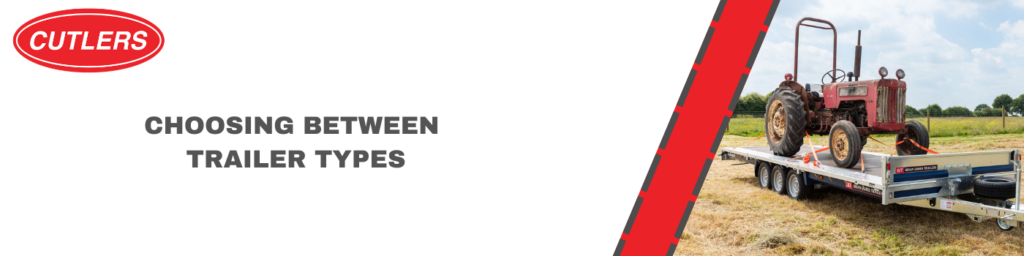
Sometimes there isn’t one perfect answer.
For example, someone looking for a trailer to support a landscaping business might narrow their search down to a plant trailer, a tipper trailer or a general purpose trailer. Each could do the job, but one will usually be better suited depending on what you’re transporting most often.
That’s why it’s worth focusing on the trailer you’ll use 80% of the time, rather than trying to find one that does absolutely everything. A trailer that excels at your day-to-day work will almost always prove to be the better long-term investment than one chosen simply because it seems more versatile.
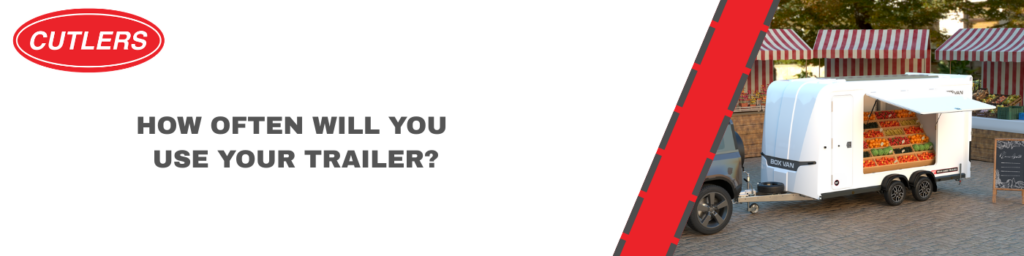
One of the easiest ways to narrow down your options is to think about how often the trailer will be used. Someone towing machinery every day will naturally have different priorities to someone who only needs a trailer for the occasional house move or weekend project. The more frequently you’ll be using it, the more important durability, ease of loading and long-term practicality become.
Before you compare specifications, ask yourself one simple question:
Will this trailer become part of my day-to-day work, or is it something I’ll only use occasionally?
If you’ll only use a trailer occasionally…
Versatility is often the biggest advantage. A General Purpose Trailer, Utility Trailer or Box Trailer can handle a wide variety of jobs, making them a sensible choice if your requirements are likely to change over time. Many first-time buyers start here because these trailer types offer flexibility without being designed for one very specific task.
If you’re only planning a one-off project or need a trailer a few times each year, it’s also worth considering Trailer Hire rather than purchasing outright.
If you’ll be using a trailer regularly…
When a trailer becomes part of your working week, buying the right tool for the job usually pays for itself.
For example:
- Contractors moving excavators and machinery are generally better served by a dedicated Plant Trailer.
- Customers transporting vehicles regularly often benefit from a purpose-built Car Trailer, with manufacturers like Brian James offering models designed specifically for professional vehicle transport.
- Tradespeople carrying valuable tools and equipment often prefer enclosed Debon Box Trailers, where security and weather protection are a priority.
- Equestrian customers usually choose specialist Horse Trailers from trusted manufacturers such as Cheval Liberteand Equi-Trek, designed with both horse and handler in mind.
Choosing a trailer that’s designed for the job doesn’t just make loading easier. It often improves safety, reduces unnecessary wear and makes everyday use far more enjoyable.
Cutlers Tip: If you’re already using a trailer every week, think beyond today’s workload. Buying with a little extra flexibility can save you from replacing the trailer in a few years as your business or hobbies grow.
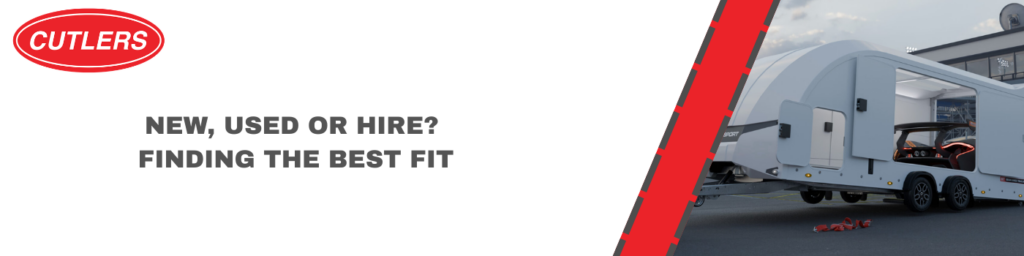
There’s no right or wrong answer when it comes to buying new, buying used or hiring a trailer. The best option depends on how often you’ll use it, the type of work you’re doing and how long you expect to keep it.
Rather than focusing purely on price, think about the overall value each option offers.
| Option | Best suited to |
| New Trailers | Customers looking for the latest models, manufacturer warranties and long-term ownership. |
| Used Trailers | Buyers looking for excellent value and proven reliability when purchasing from a trusted dealer. |
| Trailer Hire | Short-term projects, seasonal work or occasional use where ownership isn’t essential. |
Buying used can be an excellent option, particularly when the trailer has been carefully inspected and maintained. Many customers are surprised by the quality available on the used market, especially when buying from a specialist with experience assessing condition and history.
Hiring is equally worth considering. If you only need a trailer once or twice a year, renting can often be the more practical and cost-effective solution.
Whether you’re exploring our range of Used Trailers or considering Trailer Hire, matching the option to how you’ll actually use the trailer is usually more important than simply choosing the cheapest route.
Once you’ve identified the right trailer type, it’s time to start comparing manufacturers.
Every brand has its own strengths, but we’d always recommend choosing the trailer that’s best suited to the job before focusing on the name on the badge. Once you’ve narrowed your search to the right category, comparing manufacturers becomes much more straightforward.
Here’s a quick overview of some of the leading brands we stock:
| Manufacturer | Best known for |
| Brian James | Car Trailers, Plant Trailers and transport solutions. |
| Debon | Box Trailers, Tipper Trailers, Car Trailers and Motorcycle Trailers. |
| Nugent | Plant Trailers, Livestock Trailers, Flatbed Trailers and General Purpose Trailers. |
| Cheval Liberte | Horse Trailers trusted by leisure and competitive riders alike. |
| Equi-Trek | Horse Trailers and Horseboxes with comfort-focused designs and practical features. |
| CFMOTO | ATVs and UTVs for agriculture, estates and commercial use. |
The best manufacturer for you will often depend on what you’re transporting and how frequently you’ll be using the trailer. Someone towing vehicles every day may naturally be drawn towards Brian James, while an equestrian customer might compare Cheval Liberte and Equi-Trek. Likewise, businesses looking for secure enclosed transport often find themselves exploring the Debon range.
One of the most common mistakes is choosing a manufacturer before choosing the trailer itself. We’ve found that customers who start by identifying the right trailer type usually end up making a more confident decision, because they’re comparing products that have all been designed to do the same job.
Buying a trailer is a long-term investment, so it’s worth taking a little extra time before making your decision. Most mistakes aren’t caused by choosing a poor-quality trailer, they’re caused by choosing the wrong trailer for the job.
Here are some of the most common pitfalls we see and how to avoid them.
Choosing the cheapest option
Price is always an important consideration, but the cheapest trailer isn’t always the best value. A trailer that’s well suited to the work you do is likely to provide years of reliable service, whereas buying purely on cost can sometimes lead to compromises you’ll notice every time you use it.
Buying before checking your towing vehicle
It’s surprisingly common for customers to find the perfect trailer before checking what their vehicle can legally and safely tow. Understanding your towing limits should be one of the first steps in the buying process, not one of the last.
We recommend checking out the following resources before buying a trailer:
Towing with a Car | UK Government
Transporting your Horse | British Horseriding Society
Buying for today’s needs only
Think about where you’ll be in two or three years’ time. If your business is growing or your hobbies are changing, buying a trailer with a little additional flexibility now can often be more cost-effective than replacing it later.
Focusing on the brand before the trailer
Manufacturers all have their own strengths, but the trailer type should always come first. Once you’ve identified the right category for the job, comparing brands becomes much simpler and you’re far more likely to end up with a trailer that genuinely suits your needs.
Forgetting the practicalities
Storage space, loading access, security, maintenance and how often you’ll actually use the trailer can all influence which model is right for you. They’re easy things to overlook, but they often make the biggest difference once you own the trailer.
If you’ve worked through this guide, you should now have a much clearer idea of the type of trailer that best suits your needs. The next step is to explore the category that’s most relevant to the work you’ll be doing. Whether you’re transporting vehicles, moving machinery, carrying livestock or looking for a versatile trailer for everyday jobs, you’ll find dedicated buying advice and a wide range of available models across our site.
If you’re still weighing up your options, our team is always happy to help. We work with customers from a wide range of industries and experience levels, so whether you’re buying your first trailer or upgrading an existing one, we’ll help you find a solution that’s right for the job.