
Braked vs Unbraked Trailers: Which Do You Need?
When you’re choosing a trailer, one of the terms you’ll quickly come across is braked or unbraked. The difference sounds straightforward, but understanding which one you actually need involves more than simply checking whether a trailer has brakes.
An unbraked trailer relies on the towing vehicle to provide the braking force for the entire combination, while a braked trailer has its own braking system that operates when the towing vehicle slows down. This allows braked trailers to accommodate heavier loads, which is why they’re commonly used for everything from transporting horses and cars to moving plant machinery.
For lighter loads and everyday jobs, however, an unbraked trailer can be a simpler and highly practical option.
The right choice depends on what you’re carrying, the total weight of the loaded trailer and the towing limits of your vehicle. In this guide, we’ll explain those differences clearly and help you work out whether a braked or unbraked trailer is the better fit.
Braked vs Unbraked Trailers at a Glance
If you’re looking for the quick answer, here’s how the two compare.
| Feature | Unbraked Trailer | Braked Trailer |
| Braking system | No independent trailer brakes | Trailer has its own braking system |
| Maximum authorised mass | Up to 750kg | Required above 750kg |
| Typical loads | Garden waste, DIY materials, lighter equipment | Cars, horses, plant machinery and heavier loads |
| Maintenance | Simpler, with fewer braking components | Braking system requires inspection and maintenance |
| Safety connection | Secondary coupling | Breakaway cable |
| Best suited to | Lightweight and everyday transport | Heavier-duty and commercial transport |
The 750kg figure is important, but it shouldn’t be treated as an automatic allowance to tow an unbraked trailer at that weight. Your vehicle may have a lower permitted unbraked towing capacity, so both the trailer and tow vehicle limits need to be checked before setting off. The Camping and Caravanning Club makes the same distinction in its guidance, noting that individual manufacturers can specify substantially lower unbraked limits for particular vehicles.
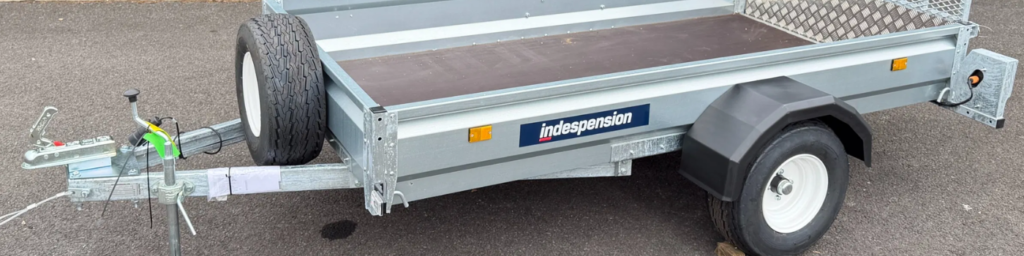
What Is an Unbraked Trailer?
An unbraked trailer doesn’t have a braking system of its own. When you slow the towing vehicle, its brakes are responsible for slowing both the vehicle and the trailer behind it.
This simplicity is one of the reasons unbraked trailers remain such a practical option for lighter loads. There are fewer braking components to maintain, the trailers themselves can be compact and lightweight, and they’re well suited to jobs where the additional capacity of a larger braked trailer simply isn’t necessary.
Typical uses might include transporting:
- Garden waste and landscaping materials.
- DIY and household items.
- Lighter tools and equipment.
- Camping or leisure equipment.
- Smaller loads around a farm, estate or business.
For someone who needs a trailer for occasional jobs around the home or relatively light everyday work, an unbraked Utility Trailer or General Purpose Trailer may therefore provide everything required without moving into a larger, heavier trailer.
However, the weight of the load matters enormously. An unbraked trailer can have a maximum authorised mass (MAM) of no more than 750kg, and that figure includes the weight of the trailer itself rather than simply the goods you’ve loaded into it.
So, if an unbraked trailer has a MAM of 750kg and weighs 200kg before you’ve loaded anything, the available payload would be 550kg.
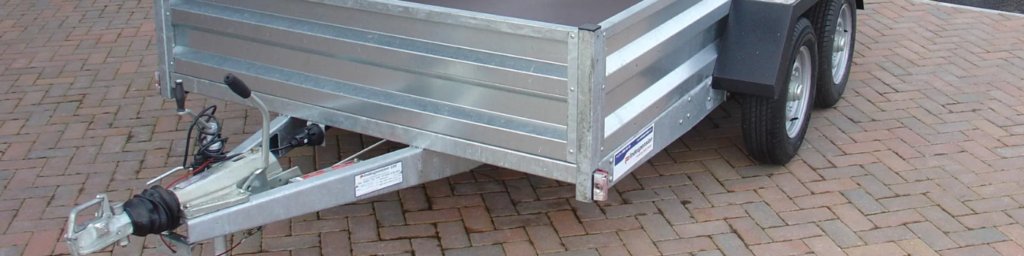
What Is a Braked Trailer?
A braked trailer has a braking system that helps slow the trailer when the towing vehicle brakes, rather than relying entirely on the tow vehicle to control the additional weight. On many trailers commonly used in the UK, this is achieved through an overrun braking system.
As the towing vehicle slows, the forward momentum of the trailer compresses the coupling mechanism. This movement operates the trailer’s brakes mechanically, helping to slow the trailer alongside the towing vehicle. When the towing vehicle accelerates again and the braking force is no longer required, the mechanism releases.
For the buyer, the important point isn’t necessarily the engineering behind the system. It’s what having those brakes allows the trailer to do.
Braked trailers can accommodate significantly heavier loads than unbraked models, which makes them the natural choice for many specialist and commercial applications.
This includes:
- Horse Trailers
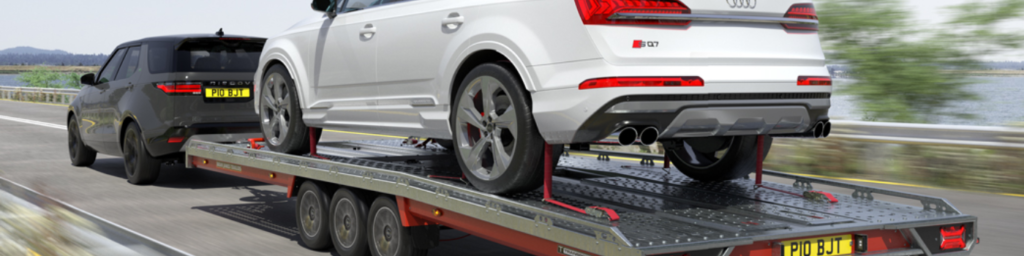
- Car Trailers
- Plant Trailers
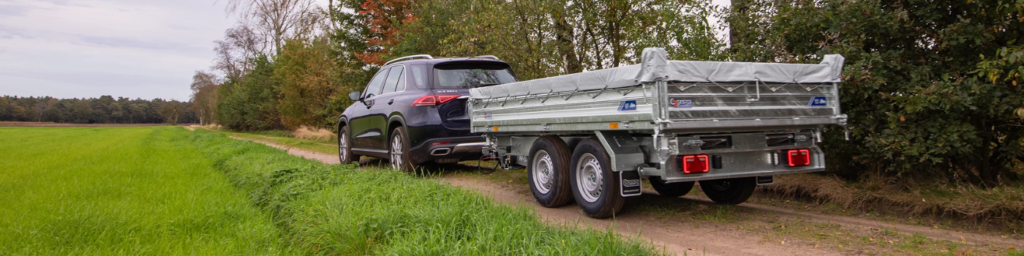
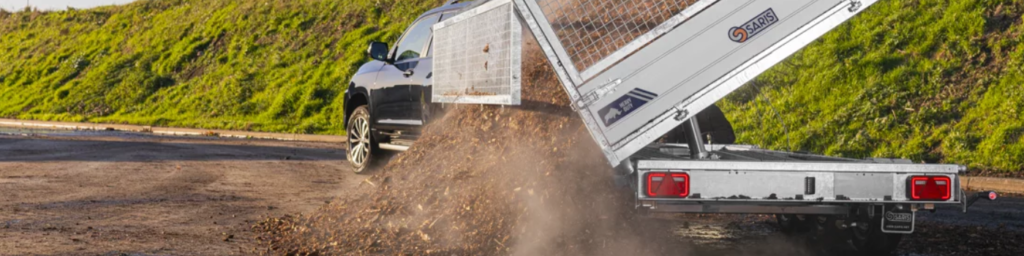
- Larger Tipper Trailers
- Heavier Flatbed Trailers
- Many commercial and agricultural trailers.
If you’re transporting a mini excavator, vehicle or horse, for example, an unbraked trailer isn’t realistically going to provide the capacity you need. Purpose-built braked trailers are designed around these heavier loads and the demands associated with transporting them.
Braked trailers do introduce additional components that need to be maintained, including the braking mechanism itself, but for heavier transport this isn’t an optional upgrade. It’s an essential part of the trailer’s design.
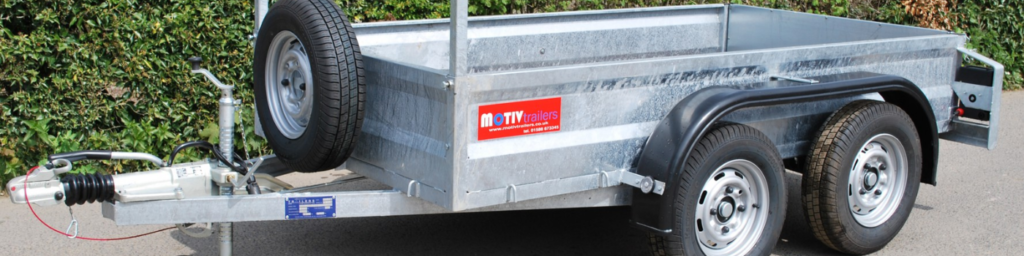
When Does a Trailer Need Brakes in the UK?
This is where it’s particularly important to separate two different questions:
Does the trailer legally require brakes?
and:
How much is my particular vehicle allowed to tow?
They aren’t necessarily the same thing. Under UK requirements, trailers with a maximum authorised mass above 750kg must have a braking system. An unbraked trailer therefore cannot have a MAM exceeding 750kg.
However, that doesn’t automatically mean you can attach any 750kg unbraked trailer to any car and load it to its maximum weight.
The towing vehicle has its own limits.
A manufacturer might specify one maximum towing capacity for a braked trailer and a considerably lower figure for an unbraked trailer. The Camping and Caravanning Club gives the example of a small car that may only be permitted to tow an unbraked trailer weighing 350kg, despite the general 750kg trailer threshold.
This means you need to check:
The trailer’s MAM – The maximum permitted weight of the trailer when fully loaded.
The vehicle’s unbraked towing capacity – If you’re considering an unbraked trailer, this may be below 750kg.
The vehicle’s braked towing capacity – This tells you the maximum braked trailer weight your particular vehicle is designed to tow.
For this decision, the important takeaway is simple: 750kg is the upper threshold for an unbraked trailer, not a universal towing allowance for every vehicle.
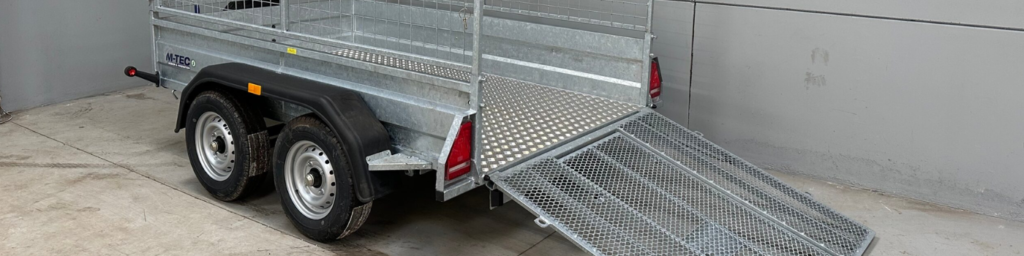
Which Is Right for What You’re Carrying?
Once you understand the weight difference, choosing between a braked and unbraked trailer becomes much easier because the load itself usually points you in the right direction.
Garden waste, DIY materials and occasional loads
For lighter jobs around the home, garden or workplace, an unbraked trailer can be an excellent solution. If the complete loaded trailer remains within both its own limits and those of the towing vehicle, there’s little benefit in buying more trailer than you actually need.
A smaller General Purpose Trailer or Utility Trailer can be particularly useful if you want something that’s straightforward to store and versatile enough to handle different everyday jobs.
Tools and lighter work equipment
This one depends much more heavily on weight. A tradesperson carrying a relatively small amount of equipment may find an unbraked trailer perfectly adequate, while heavier tools, machinery and materials can quickly push the total loaded weight beyond what’s possible with an unbraked model.
Don’t estimate here. Work out roughly what you’ll regularly carry and leave enough capacity for the items that tend to get added later.
Landscaping and grounds maintenance
Either option could be appropriate depending on the work involved.
Green waste, hand tools and lighter equipment may sit comfortably within the limits of an unbraked trailer. Once you’re regularly transporting compact machinery, heavier materials or larger quantities of equipment, a braked trailer is likely to become the more appropriate option.
Mini excavators and plant machinery
This is firmly braked trailer territory. Mini diggers, dumpers, rollers and their attachments require the payload and construction offered by dedicated Plant Trailers. Buyers can then compare designs such as Beavertail Trailers and Tiltbed Trailers depending on the machinery being transported and preferred loading method.
Cars and other vehicles
Vehicle transport requires a purpose-built braked Car Trailer with sufficient capacity for the vehicle being carried.
The same principle we’ve discussed throughout this guide applies here too. Don’t just check whether the car physically fits on the trailer. Its weight, the trailer’s available payload and the towing capacity of the tow vehicle all need to work together.
Horses
Horse transport requires a purpose-built Horse Trailer, with braked trailers providing the capacity and specialist design required for safe equine transport. Weight calculations should account for everything being carried, including the horse or horses, equipment and any other load placed inside the trailer.
Heavier commercial and agricultural work
Once a trailer becomes part of a working day and regularly carries substantial loads, braked models are generally where buyers will be looking. Tippers, flatbeds and specialist commercial trailers provide much greater payload potential while offering configurations designed around particular industries and jobs.
The key is not to choose braked simply because it sounds like the more capable option. If an unbraked trailer comfortably handles everything you need to transport and falls within your vehicle’s limits, its simplicity may be a genuine advantage. Equally, trying to squeeze a heavier workload into a lightweight trailer to avoid moving up to a braked model is a false economy.
Choose around the load you actually need to carry, then make sure the trailer and towing vehicle are compatible.
Breakaway Cables and Secondary Couplings: What’s the Difference?
Both braked and unbraked trailers need protection in the event that the main coupling between the trailer and towing vehicle fails, but the systems used aren’t the same.
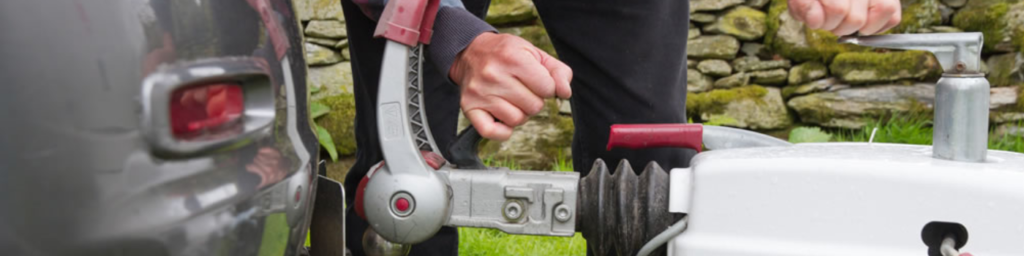
A braked trailer uses a breakaway cable. If the trailer becomes detached from the towing vehicle, the cable is designed to activate the trailer’s brakes before separating, helping bring the trailer to a stop.
An unbraked trailer uses a secondary coupling, typically a chain or strong cable. Because there are no trailer brakes to activate, its purpose is to keep the trailer connected to the towing vehicle if the main coupling fails, allowing the driver to bring the combination to a controlled stop. The Camping and Caravanning Club specifically highlights that a secondary coupling and a breakaway cable perform different functions and shouldn’t be confused with one another.
Whichever type of trailer you’re towing, these aren’t components to overlook. They should be correctly connected whenever you tow and checked regularly for damage or excessive wear.
Don’t Confuse Trailer Capacity With Towing Capacity
This is one of the most important points to understand when buying any trailer.
A trailer might be capable of operating at a particular maximum weight, but that doesn’t automatically mean your vehicle can tow it at that weight.
Imagine you’re looking at a braked trailer with a maximum authorised mass of 3,500kg. Your tow vehicle, however, has a maximum braked towing capacity of 2,500kg. The trailer’s higher rating doesn’t increase what the vehicle is permitted to tow. You still need to remain within the applicable limits for the vehicle and trailer combination.
The same principle applies to unbraked trailers. As we’ve already covered, the fact that an unbraked trailer can have a MAM of up to 750kg doesn’t mean every vehicle is capable of towing 750kg unbraked. This is why it’s worth looking at the complete setup rather than considering the trailer in isolation.
What About Your Driving Licence?
Trailer capability and vehicle towing capacity are only part of the picture. You also need to make sure you’re legally entitled to drive the vehicle and trailer combination you’re planning to use.
UK towing licence rules have changed over the years, which can make this area particularly confusing if you’re relying on older advice online.
For current government guidance, you can also check GOV.UK guidance on towing with a car.
Keeping these issues separate is important. Whether a trailer requires brakes, whether your vehicle is technically capable of towing it and whether you’re licensed for the combination are related questions, but they’re not interchangeable.
Braked Doesn’t Automatically Mean Better
With greater payload potential and their own braking systems, it’s easy to assume that a braked trailer is always the better purchase. For plenty of buyers, that simply isn’t the case.
If you’re regularly carrying heavy equipment or transporting cars, horses or machinery, you’ll naturally be looking towards a braked trailer. The additional capacity isn’t something you could sensibly replace with a lightweight unbraked model.
For lighter everyday use, however, an unbraked trailer has some genuine advantages.
There are fewer braking components to maintain, trailers can be lighter and more compact, and you aren’t paying for capacity that you may never use. If you’re taking garden waste to the tip, moving lighter equipment or handling occasional jobs around a property, simplicity can be exactly what you want.
This is why we’d avoid choosing between the two based on the braking system alone. Think about payload, dimensions, storage, frequency of use and the tow vehicle alongside the jobs you need the trailer to perform.
Buying for Occasional Use? Consider Hiring
There’s another option that’s easy to overlook when comparing trailers: you might not need to buy one at all. If you only need a trailer for a particular job, occasional vehicle transport or a short-term project, Trailer Hire can give you access to a suitable trailer without committing to ownership.
This can be particularly useful when your normal requirements are relatively light but you occasionally need considerably more capacity. Rather than buying a larger braked trailer because you might need it once or twice each year, it may make more sense to own something smaller for your regular workload and hire specialist equipment when the job demands it.
For businesses using trailers every week, ownership is naturally much easier to justify. The important thing is to consider frequency alongside capability before deciding where your money is best spent.
New or Used: Does It Make a Difference?
The same braked and unbraked principles apply whether you’re buying new or pre-owned, although condition becomes particularly important when you’re considering a used trailer.
On a braked model, the braking system, coupling, breakaway cable and running gear all deserve careful attention. With an unbraked trailer there may be fewer mechanical components involved, but that doesn’t remove the need to inspect the chassis, coupling, tyres, lights, suspension and general condition.
Payload and identification plates matter too. You need to know exactly what you’re buying and the weight at which the trailer is designed to operate.
For buyers looking to make their budget go further, our Used Trailers include pre-owned options across a range of trailer types and manufacturers. Buying through an established trailer dealership also gives you somewhere to turn if you’re unsure whether a particular trailer is suitable for the job you have in mind.
Braked or Unbraked? Making the Final Decision
If you’re still deciding, bring the choice back to a few practical questions.
What will you normally carry? Estimate the weight of the complete load rather than the largest individual item.
How much payload do you actually need? Remember that the weight of the trailer itself forms part of its maximum authorised mass.
What can your vehicle tow? Check both braked and unbraked towing limits where applicable rather than assuming they’re the same.
How often will you use the trailer? Regular commercial use may justify investing in greater capacity, while occasional lightweight jobs could be better suited to a simpler trailer or even hiring.
Could your requirements change? If your equipment, workload or business is likely to grow, allowing some additional capacity can prevent you from outgrowing your trailer too quickly.
For a buyer carrying relatively lightweight loads, an unbraked trailer can be a simple, convenient and cost-effective solution. Once the loads become heavier, a braked trailer provides the braking system and capacity required for more demanding transport.
The important thing is not to buy based on a label. Choose the trailer that suits the load, then make sure the trailer, tow vehicle and driver all work together as a legal and appropriate combination.
Find the Right Trailer at Cutlers Sales & Hire
From lightweight trailers for everyday jobs to specialist braked trailers built for demanding commercial work, Cutlers Sales & Hire offers options for a wide range of transport requirements.
Our team can help you compare trailer types, payloads and configurations based on what you actually need to carry. If that means a straightforward unbraked trailer, we’ll help you find one that fits the job. If you need greater capacity, we can guide you through our braked Plant Trailers, Car Trailers, Horse Trailers, Tipper Trailers, Flatbed Trailers and other specialist options.
We also stock trailers from a broad selection of leading manufacturers, giving you the opportunity to compare different designs rather than being restricted to a single brand.
Browse our Trailers for Sale, explore the latest Used Trailers, or speak to the Cutlers team if you’re unsure where to begin. Getting the braking system right matters, but finding a trailer that’s properly matched to your vehicle, load and everyday requirements is what will make the biggest difference once you start using it.