
Open vs Enclosed Car Trailers: Which Is Right for You?
Choosing between an open and enclosed car trailer is one of the biggest decisions you’ll make when buying a car transporter. Both have their strengths, but the right choice depends entirely on what you’re transporting, how often you’ll be using the trailer and the level of protection you need.
For some owners, an open trailer offers everything they need. It’s practical, lightweight and ideal for regular use. For others, particularly those transporting classic, performance or prestige vehicles, the extra protection and security of an enclosed trailer can make it a worthwhile investment.
The good news is that there’s no universally “better” option.
At Cutlers, we’ve helped customers choose trailers for everything from weekend track days and classic car shows to professional vehicle transport. This guide will walk you through the differences between open and enclosed car trailers, helping you decide which option best suits your vehicles and how you plan to use them.
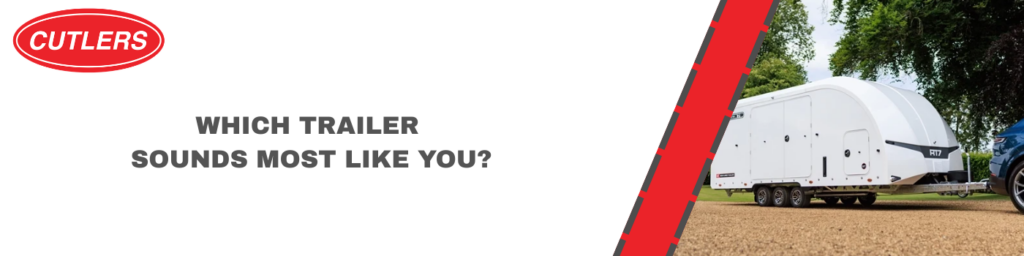
Before comparing specifications, think about how you’ll actually use your trailer. In many cases, the answer becomes surprisingly clear once you consider the type of vehicle you’re transporting and the journeys you’re making.
| If you… | An open trailer may be the better choice | An enclosed trailer may be the better choice |
| Regularly attend track days | ✓ | |
| Transport classic or prestige vehicles | ✓ | |
| Want maximum protection from the weather | ✓ | |
| Need a lightweight trailer | ✓ | |
| Frequently collect or deliver vehicles | ✓ | |
| Want additional security when parked | ✓ | |
| Need space for tools, spares or equipment | ✓ | |
| Want the most cost-effective option | ✓ |
There’s no right or wrong answer, but if you find yourself ticking more boxes in one column than the other, you’ve already got a good indication of which type of car trailer is likely to suit you best.
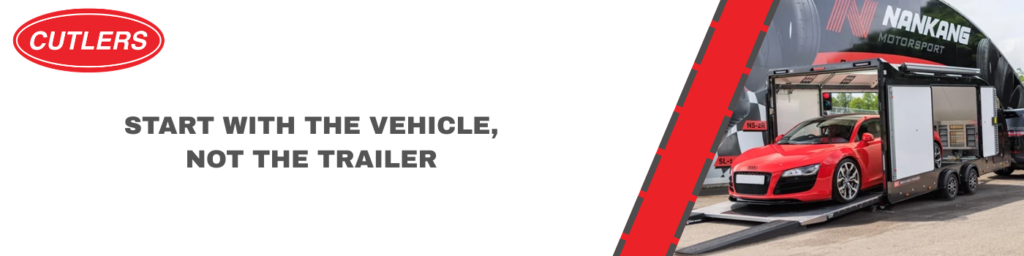
One of the most common mistakes buyers make is comparing trailers before thinking about what they’ll actually be transporting.
A lightweight track car has very different requirements to a restored classic or a prestige vehicle that’s heading to a concours event. By understanding your priorities first, you’ll find it much easier to decide whether an open or enclosed trailer makes the most sense.
Classic and collector cars
If you’ve invested significant time and money restoring a vehicle, protecting its condition naturally becomes a priority. An enclosed trailer helps shield paintwork from the weather, road grime and loose debris, while also providing additional security during transport and when parked.
Performance and track cars
For many track day enthusiasts, convenience is just as important as protection.
Open trailers are often quicker to load and unload, lighter to tow and make regular trips to circuits straightforward. If you’ll be transporting your car most weekends throughout the season, an open trailer can be a practical and efficient solution.
Everyday vehicles
Whether you’re collecting auction purchases, transporting customer vehicles or moving everyday cars between locations, an open trailer is often more than capable of handling the job.
Many businesses choose open transporters because they’re simple to use, offer excellent visibility while securing the vehicle and are generally more affordable than enclosed alternatives.
Prestige and specialist vehicles
For supercars, rare classics and high-value vehicles, many owners see an enclosed trailer as an investment rather than an expense. The added protection, privacy and security provide extra peace of mind, particularly for longer journeys or when attending events where presentation matters.
What we’ve learnt: One of the first questions we ask isn’t whether someone wants an open or enclosed trailer. It’s what they’re transporting and how often they’ll be using it. More often than not, that conversation makes the decision much easier.
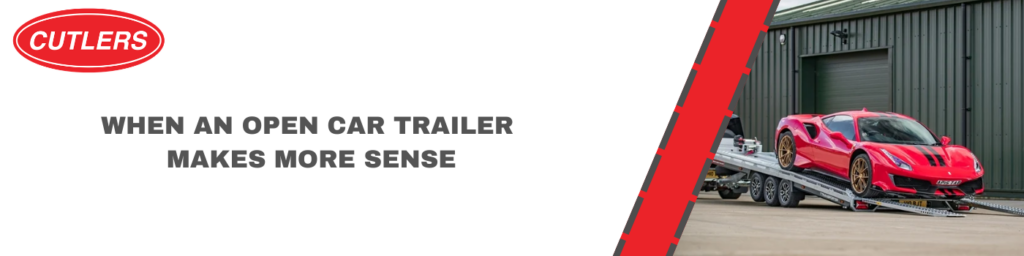
Open car trailers remain the most popular choice for many buyers, and it’s easy to see why. They’re practical, straightforward to use and offer excellent value for anyone transporting vehicles on a regular basis.
If your priority is getting vehicles safely from A to B without paying for features you may never need, an open trailer is often the logical choice.
Open car trailers are particularly well suited to:
- Regular vehicle transport, where quick loading and unloading are important.
- Track day enthusiasts travelling to circuits throughout the year.
- Dealerships and garages moving stock between locations.
- Vehicle recovery and collection, where efficiency matters.
- Buyers looking for a lighter trailer, particularly if towing capacity is a consideration.
Another advantage is visibility. Because the vehicle remains fully accessible during transport, securing loads and carrying out checks before setting off is often quicker and more straightforward.
For customers looking for professional-quality transporters, our range of Brian James Open Car Transporters has become a popular choice thanks to their proven reliability, thoughtful design and ease of use.
Cutlers Tip: Don’t assume an enclosed trailer is automatically the better option. If you’ll be using your trailer every week to move everyday, track or project cars, an open transporter may offer everything you need while remaining lighter, simpler to maintain and more cost-effective to own.
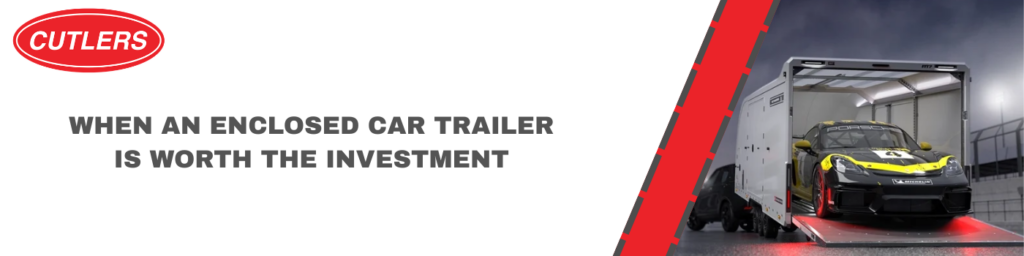
An enclosed trailer costs more than an open transporter, so it’s only natural to question whether the extra investment is worthwhile.
If you’re transporting vehicles where condition, security or presentation are priorities, the benefits of an enclosed trailer quickly become clear. Rather than simply moving a vehicle from one location to another, you’re giving it an extra layer of protection throughout the journey.
Enclosed car trailers are particularly popular with:
- Classic car owners who want to protect valuable paintwork and bodywork.
- Supercar and prestige vehicle owners looking for greater security during transport.
- Race teams carrying tools, spare wheels and equipment alongside the vehicle.
- Dealerships transporting premium vehicles to customers.
- Owners travelling longer distances, where changing weather and road conditions become more of a factor.
There’s also the added benefit of privacy. Keeping a valuable vehicle out of sight can provide extra reassurance when travelling or stopping overnight.
Our range of Brian James enclosed car transporters has been designed with these customers in mind, offering secure, purpose-built transport for vehicles where protection is every bit as important as practicality.
Many buyers also consider Debon car trailers, particularly if they’re looking for a versatile enclosed trailer that combines everyday usability with excellent build quality.
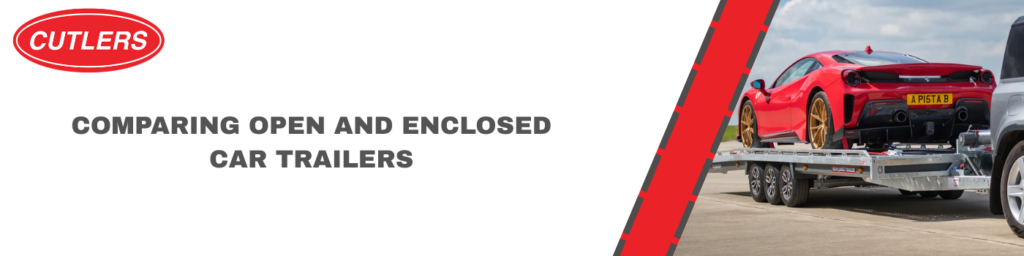
Once you’ve narrowed down your priorities, comparing the two trailer types becomes much simpler.
| Consideration | Open Car Trailer | Enclosed Car Trailer |
| Purchase cost | Usually the more affordable option to buy and own. | Higher initial investment, reflecting the additional protection and features. |
| Weather protection | Vehicles remain exposed to rain, road spray and debris. | Vehicles are protected from the elements throughout the journey. |
| Security | The vehicle remains visible when parked or travelling. | The vehicle is hidden from view and benefits from the additional security of an enclosed trailer. |
| Trailer weight | Typically lighter, making towing easier for many vehicles. | Heavier construction, so towing capacity should always be considered. |
| Loading and access | Fast loading with excellent access around the vehicle. | Slightly slower to load but offers greater protection once inside. |
| Storage space | Limited to the vehicle itself. | Additional room for tools, spare wheels and event equipment. |
| Best suited to | Track cars, project cars, dealership movements and regular transport. | Classic, prestige, competition and collector vehicles where protection is a priority. |
Rather than asking which trailer is better, it’s more useful to ask which one fits the way you’ll use it. The answer is often clearer than you might expect.
Buying a car trailer isn’t just about getting from A to B. It’s about living with that trailer for years to come. Before making your decision, take a moment to think about how you’ll use and store it once it’s part of your everyday routine.
Where will you keep it?
An enclosed trailer naturally takes up more space than an open transporter, both in terms of height and overall footprint. If you’re storing it at home or inside a workshop, make sure you’ve considered access, turning space and any height restrictions before making your decision.
How often will it be used?
Someone transporting vehicles every weekend may value the lighter weight and simplicity of an open trailer. If you’ll only be towing a handful of times each year with a high-value vehicle, the additional protection of an enclosed trailer may be worth every penny.
What else will you carry?
Many owners underestimate how useful an enclosed trailer can be away from the road. Having somewhere secure to store tools, spare wheels, cleaning products, jacks and event equipment can make a real difference, particularly if you regularly attend race meetings, exhibitions or classic car shows.
Ask Yourself
- How valuable is the vehicle you’re transporting?
- Will poor weather change your travel plans?
- Do you regularly carry tools or spare parts alongside the vehicle?
- Where will the trailer be stored when it’s not in use?
- How often will you realistically tow throughout the year?
These questions don’t have right or wrong answers, but they often help buyers identify which type of trailer best matches their day-to-day needs.
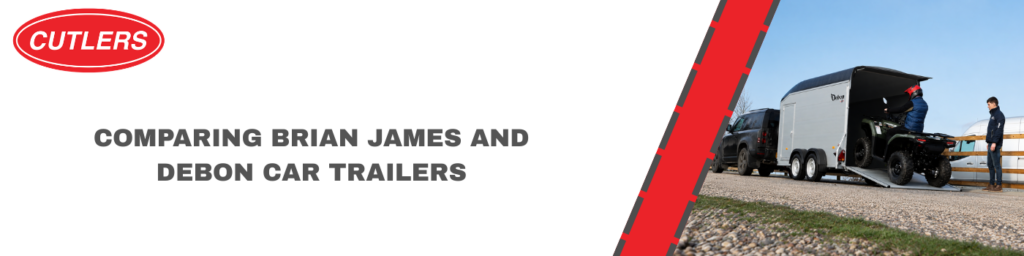
Once you’ve decided between an open or enclosed trailer, choosing the right manufacturer becomes much easier. At Cutlers, two of the most popular options are Brian James and Debon, with each offering strengths that appeal to different customers.
Brian James Open Car Transporters
A popular choice for track day enthusiasts, dealerships and professional vehicle transport, Brian James open trailers are known for their robust construction, excellent towing characteristics and practical loading systems.
Brian James Enclosed Car Transporters
Designed for customers transporting prestige, classic and competition vehicles, these Brian James enclosed trailers combine high levels of protection with premium build quality and thoughtful design features.
Debon Car Trailers
Debon car trailers are a versatile option for buyers looking for secure vehicle transport alongside everyday practicality. They’re particularly popular with customers who need an enclosed trailer that’s equally at home transporting vehicles, equipment or other valuable loads.
Whichever manufacturer you choose, we always recommend focusing on how you’ll use the trailer first. Once that’s clear, selecting the right model becomes a far more straightforward decision.
What we’ve learnt: Customers rarely regret buying the trailer that genuinely suits the way they use it. Taking a little extra time to think about your vehicle, your journeys and your long-term plans usually leads to a purchase you’ll be happy with for years to come.
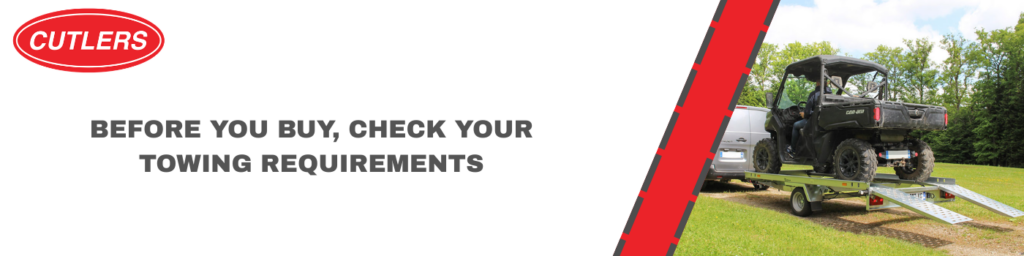
Whichever type of trailer you choose, it’s important to make sure your towing vehicle is suitable for the job.
Before buying, check your vehicle’s maximum towing capacity, the trailer’s weight when loaded and any licence requirements that apply to you. Spending a few minutes confirming these details now can help avoid expensive mistakes later.
The official GOV.UK guide to towing with a car is an excellent resource, covering towing limits, licence rules and the legal responsibilities of towing safely on UK roads.
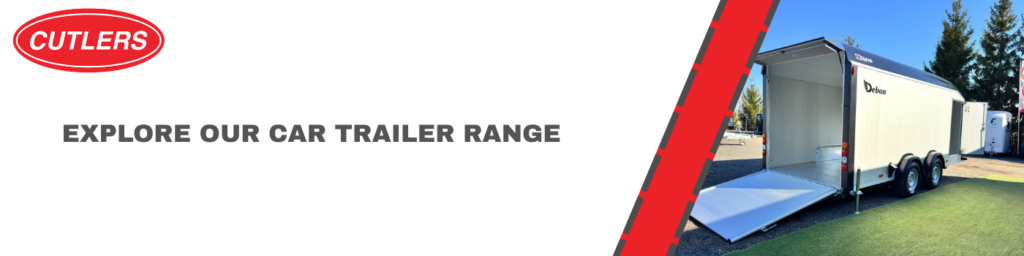
Choosing between an open and enclosed car trailer comes down to understanding how you’ll use it.
For some buyers, an open transporter offers the perfect balance of affordability, simplicity and everyday practicality. For others, the additional protection and security of an enclosed trailer make it a worthwhile investment, particularly when transporting valuable or specialist vehicles.
If you’re still weighing up the options, our team is always happy to help. We’ll talk through the type of vehicle you’re transporting, how often you’ll tow and the features that matter most, before recommending a trailer that genuinely suits your needs.