
Trailer Weights Explained: Payload, GTW and Towing Capacity
Trailer weight terminology can make choosing the right trailer feel more complicated than it needs to be. MAM, payload, unladen weight, towing capacity and GTW all describe different things, but understanding how they fit together is essential if you want to know how much your trailer can actually carry.
The key is not to focus on one headline figure. A trailer may be rated to 3,500kg, for example, but that doesn’t mean you can put 3,500kg of machinery, materials or equipment onto it. The weight of the trailer itself needs to be accounted for, as do the limits of the vehicle you’re using to tow it.
This guide explains the main trailer weight terms, how to calculate payload and how to use the figures when comparing trailers.
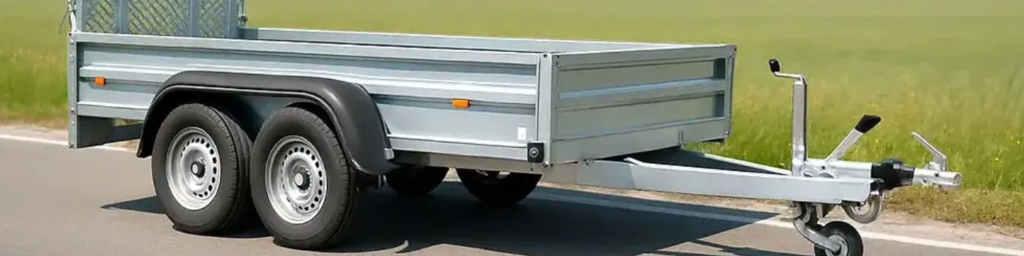
Trailer Weight Terms at a Glance
Before we start calculating anything, these are the main figures you’ll come across:
| Term | What it means |
| MAM / Gross Weight | The maximum permitted weight of the trailer when fully loaded |
| Unladen Weight | The weight of the trailer before adding your load |
| Payload | The amount of weight the trailer can carry |
| Towing Capacity | The maximum trailer weight your vehicle is rated to tow |
| GTW | The maximum permitted combined weight of the loaded tow vehicle and loaded trailer |
You’ll find these figures in different places depending on what you’re checking. Trailer specifications and identification plates provide information about the trailer, while your vehicle handbook, specification and VIN plate provide the figures relevant to your tow vehicle. The important thing is that these limits work together. Staying within the trailer’s MAM doesn’t automatically mean you’re within the limits of your towing vehicle.
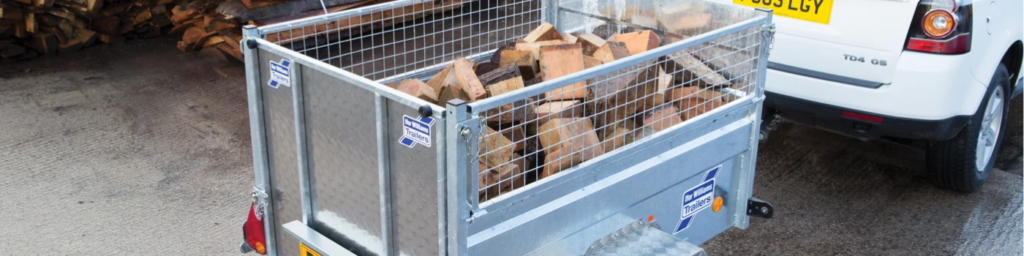
What Is a Trailer’s MAM?
MAM stands for Maximum Authorised Mass. It is the maximum permitted weight of the trailer when fully loaded. You may also see this described as the trailer’s gross weight.
If a trailer has a MAM of 3,500kg, the combined weight of the trailer itself and everything loaded onto it must remain within that figure.
This is where a common misunderstanding can occur. A 3,500kg MAM doesn’t mean you have 3,500kg of carrying capacity. Some of that allowance is already taken up by the trailer itself.
To work out how much you can actually carry, you need the trailer’s unladen weight too.
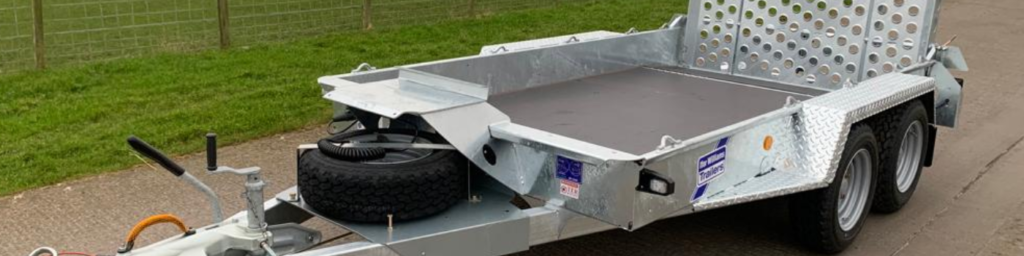
What Is the Unladen Weight of a Trailer?
The unladen weight is the weight of the trailer before your load is added. Different trailer designs can have very different unladen weights, even where their overall MAM is similar. Construction materials, dimensions, axles, ramps, bodywork and other equipment can all affect how much the trailer itself weighs.
This matters because every kilogram of trailer weight uses some of its maximum permitted mass.
Imagine two trailers are both rated to 3,500kg MAM:
| Trailer A | Trailer B | |
| MAM | 3,500kg | 3,500kg |
| Unladen weight | 800kg | 1,100kg |
| Available payload | 2,700kg | 2,400kg |
Both trailers have the same headline MAM, but Trailer A provides an additional 300kg of payload. That’s why comparing MAM alone doesn’t tell you which trailer offers the carrying capacity you need.

What Does Trailer Payload Mean?
Payload is the amount of weight you can add to the trailer without exceeding its MAM.
For trailer buyers, it’s one of the most useful specifications to understand because it tells you whether the trailer can actually carry the vehicle, machine, horse, materials or equipment you need to transport.
The basic calculation is straightforward:
Trailer MAM − Trailer unladen weight = Maximum payload
For example:
- MAM: 3,500kg
- Unladen weight: 900kg
- Maximum payload: 2,600kg
So although this is described as a 3,500kg trailer, the maximum payload is 2,600kg.
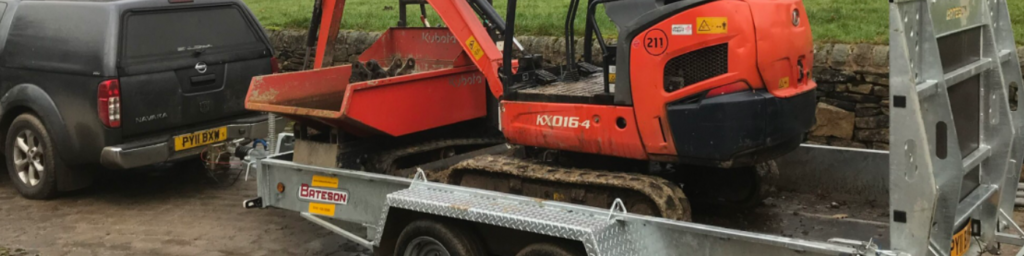
If you’re comparing Plant Trailers for a mini excavator weighing 2,400kg, that difference matters. A trailer with a 2,600kg payload provides 200kg of remaining capacity, but attachments or additional equipment carried on the trailer could quickly use that allowance.
The same principle applies whether you’re transporting machinery, vehicles, horses or materials. Work from the complete load rather than the weight of the main item alone.

MAM vs Actual Loaded Weight
MAM tells you the maximum the trailer is permitted to weigh, not what it weighs every time it’s used.
Take our previous example:
- Trailer MAM: 3,500kg
- Unladen weight: 900kg
- Load being carried: 1,500kg
The trailer’s actual loaded weight would be:
900kg + 1,500kg = 2,400kg
Its MAM remains 3,500kg, but you’re currently towing 2,400kg of trailer and load.
This distinction becomes important when you’re comparing a trailer with the capabilities of your tow vehicle. Seeing 3,500kg MAM on a trailer doesn’t necessarily mean that 3,500kg will be sitting behind your vehicle every time you use it.
However, MAM can still be relevant to other towing requirements, including driving licence entitlement. We’ve covered that separately in our What Driving Licence Do You Need to Tow a Trailer? guide rather than repeating the licence rules here.

What Is Vehicle Towing Capacity?
Once you know what your trailer and load will weigh, the next figure to check belongs to the towing vehicle. Towing capacity is the maximum trailer weight the vehicle manufacturer specifies that the vehicle can tow.
This isn’t determined by how powerful or substantial the vehicle looks. Different engines, transmissions and versions of otherwise similar vehicles can have different limits, so always check the specification for the exact vehicle you’re using.
Most cars have a maximum towing weight listed in the handbook or specification information. Depending on the vehicle, you may also see separate figures for braked and unbraked trailers.
If you’re comparing these figures with a trailer, remember that towing capacity relates to the trailer and its load, not simply its payload.
For example:
- Trailer unladen weight: 900kg
- Load: 1,800kg
- Actual loaded trailer weight: 2,700kg
Your tow vehicle therefore needs to be suitable for the 2,700kg loaded trailer, not just the 1,800kg being carried.
If you’re unsure about the difference between the two braking arrangements, our Braked vs Unbraked Trailers guide covers that subject separately.
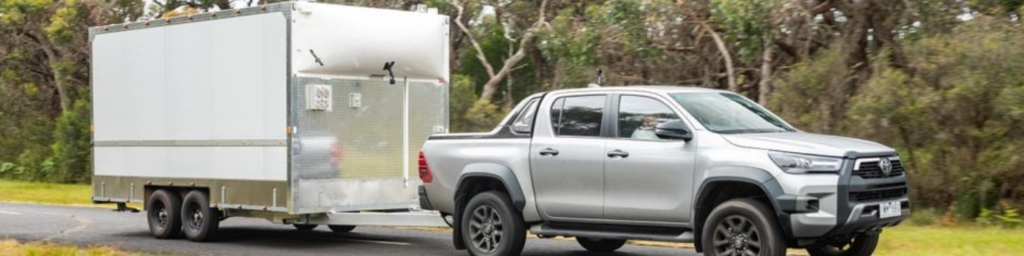
What Is Gross Train Weight?
Gross Train Weight (GTW) is the maximum permitted combined weight of the fully loaded towing vehicle and fully loaded trailer. This is another figure that can affect what you’re actually able to tow.
GOV.UK advises that the gross train weight may be shown on the vehicle’s VIN plate, normally located under the bonnet or inside the driver’s door. If the VIN plate doesn’t list a train weight, GOV.UK states that you should not use the vehicle for towing.
You can check the current official guidance through GOV.UK’s towing weight and width information.
The important distinction is that towing capacity looks at what the vehicle can tow, while GTW places a limit on the combined weight of the towing vehicle and trailer.

How GTW Affects What You Can Tow
This is easiest to understand with an example.
Imagine a vehicle has:
GTW: 6,000kg
Maximum towing capacity: 3,500kg
Actual loaded vehicle weight: 2,800kg
There is:
6,000kg − 2,800kg = 3,200kg remaining within the vehicle’s GTW.
Despite the vehicle having a headline towing capacity of 3,500kg, loading the trailer to 3,500kg in this example would result in a combined actual weight of 6,300kg, exceeding the 6,000kg GTW.
Reducing the amount carried in the tow vehicle could change the calculation, but you still need to remain within every other applicable limit.
The reverse can happen too. If the GTW leaves enough capacity for a 3,500kg trailer but the manufacturer’s towing capacity is only 3,000kg, you don’t suddenly gain another 500kg of towing capacity.
You need to remain within both limits.
This is why towing capacity, trailer MAM and GTW shouldn’t be looked at independently. Once you understand how they interact, comparing trailers becomes much easier because you can concentrate on the capacity that’s genuinely available for the load you need to move.
How Trailer Weight, Payload and Towing Capacity Work Together
Once you understand the individual figures, the important part is knowing how they affect the trailer you can actually use.
Imagine you’re considering a trailer with the following specifications:
Trailer MAM: 3,500kg
Trailer unladen weight: 900kg
Maximum trailer payload: 2,600kg
Your tow vehicle has a maximum towing capacity of:
3,000kg
The trailer itself is capable of carrying up to 2,600kg, but you can’t use all of that payload behind this particular vehicle.
With the trailer already weighing 900kg:
3,000kg towing capacity − 900kg trailer weight = 2,100kg
Subject to the vehicle’s GTW and any other applicable limits, that leaves a maximum of 2,100kg for the load when using this particular combination.
Put the same trailer behind a suitably rated tow vehicle and more of its available payload may become usable.
This is why a trailer’s maximum payload and your vehicle’s towing capacity shouldn’t be treated as interchangeable figures. The trailer, load and tow vehicle all need to work together.
How Much Trailer Payload Do You Need?
Choosing the right payload starts with establishing what you’ll actually be transporting.
Ideally, don’t base this on a rough estimate. Find an accurate weight for the vehicle, machine or other load wherever possible, then account for anything else that will travel on the trailer.
The calculation will look slightly different depending on what you’re carrying:
| Trailer type | What to include in your load calculation |
| Plant Trailers | Machine, buckets, breakers, attachments and other equipment |
| Car Trailers | Vehicle and any additional equipment carried on the trailer |
| Horse Trailers | Horse or horses, plus tack and equipment carried inside |
| Tipper Trailers | Full weight of aggregates, soil, waste or other materials |
| Flatbed Trailers | Pallets, machinery, timber, building materials and equipment |
| General Purpose Trailers | Tools, machinery, materials and everything else being transported |
This is also why buying solely on the weight of your main load can leave you short of capacity. A 2,300kg machine might appear comfortably within a 2,500kg trailer payload, for example. Add a 150kg attachment and another 100kg of equipment and that margin has disappeared.
If you’re regularly carrying different loads, think about your heaviest realistic setup, rather than only what you need to transport today.
Don’t Forget the Extras!
Some of the easiest weight to overlook comes from relatively small items.
Depending on the trailer and how you use it, this could include:
- Buckets and machine attachments
- Tools and equipment
- Spare wheels
- Additional ramps
- Tack and equipment
- Straps and load-securing equipment
- Anything else stored or carried on the trailer
Individually, some of these may not weigh very much. Together, they can make a meaningful difference when you’re already close to the trailer or vehicle limit.
Load position matters as well as total weight. The trailer’s applicable axle limits must be observed, and the load should be positioned correctly rather than simply placed wherever it fits. Correct loading also helps maintain appropriate noseweight and a stable towing setup.
For the purpose of choosing your trailer, however, the first job is simple: make sure everything you intend to put onto or into the trailer has been included in your payload calculation.
Where to Find Your Trailer and Vehicle Weight Information
You shouldn’t need to guess any of the main figures we’ve covered.
On the trailer
Check the trailer’s identification or specification plate and manufacturer information. Depending on the trailer, this can provide details including its MAM and axle ratings.
The manufacturer’s specifications can also help you establish the trailer’s unladen weight and available payload.
On the tow vehicle
Check the handbook or specification information for the manufacturer’s towing capacity.
The vehicle’s VIN plate provides important weight information too, including the vehicle’s maximum authorised weight and, where applicable, gross train weight.
Because specifications can vary between different versions of the same vehicle, make sure you’re checking figures for the exact model, engine and configuration you’re using, rather than relying on a general figure found online.
For current UK guidance on towing weights and how to locate the relevant information, refer to GOV.UK’s official towing guidance.
A Simple Trailer Weight Check Before You Buy
If you’re comparing trailers and the terminology is starting to become confusing, bring everything back to five checks.
- Find the trailer’s MAM and unladen weight
These give you the starting figures for understanding its carrying capacity.
- Calculate the available payload
Subtract the unladen weight from the MAM.
- Calculate the complete weight of your load
Include equipment, attachments and anything else that will travel on the trailer.
- Check your tow vehicle
Compare the actual loaded trailer weight with the manufacturer’s towing capacity and make sure the complete combination remains within the applicable GTW.
- Make sure the figures work together
The trailer needs enough payload for the job, but your vehicle must also be suitable for towing the resulting loaded weight.
You’ll also need to make sure you have the correct driving licence entitlement for your combination. We’ve covered that separately in What Driving Licence Do You Need to Tow a Trailer?

Choosing a Trailer With the Right Payload
More capacity isn’t automatically better. The aim is to find a trailer that provides enough usable payload for what you need to carry while remaining suitable for your towing vehicle.
At Cutlers Sales & Hire, we stock trailers for everything from lighter everyday loads through to cars, plant machinery, horses, livestock and demanding commercial applications. Our range includes Plant Trailers, Car Trailers, Horse Trailers, Tipper Trailers, Flatbed Trailers, Box Trailers, Utility Trailers and General Purpose Trailers, with different sizes, weights and payloads available across leading manufacturers.
If you’re comparing models, don’t be afraid to look beyond the headline gross weight. Unladen weight and usable payload can be just as important, particularly where two similarly rated trailers have noticeably different carrying capacities.
Our team can also help you compare the relevant specifications if you’re unsure which trailer best matches your load and tow vehicle. You can explore our Trailers for Sale and current Used Trailers, or consider Trailer Hire if you only need additional capacity for a particular job.
Get the numbers right at the beginning and choosing the right trailer becomes much simpler: know what you need to carry, establish the payload you need and make sure your tow vehicle can handle the resulting loaded trailer.