What Driving Licence Do You Need to Tow a Trailer?
Trailer towing licence rules can seem complicated, particularly because the rules changed in 2021 and plenty of older advice is still available online. Fortunately, for most drivers, the current position is relatively straightforward.
If you got your driving licence before 1 January 1997, you can usually drive a vehicle and trailer with a combined maximum authorised mass (MAM) of up to 8,250kg. If you got your licence from 1 January 1997, you can tow a trailer with a MAM of up to 3,500kg under Category BE entitlement.
However, your driving licence is only one part of the calculation. Your towing vehicle and trailer have their own weight limits, and these still apply regardless of what your licence allows you to drive.
For the latest rules and to check your individual entitlement, we recommend using the official GOV.UK guidance on towing with a car.
UK Trailer Towing Licence Rules at a Glance
The first thing you need to know is when you passed your car driving test.
| When you got your licence | What you can usually tow |
| Before 1 January 1997 | A vehicle and trailer with a combined MAM of up to 8,250kg |
| From 1 January 1997 | A trailer with a MAM of up to 3,500kg under Category BE entitlement |
These figures describe driving licence entitlement. They don’t mean that every vehicle can tow up to these weights.
For example, having Category BE entitlement doesn’t automatically allow you to tow a 3,500kg trailer behind your current car. The vehicle must also be designed and rated to tow the trailer, and all applicable vehicle, trailer and combination weight limits must be observed.
What Changed to Trailer Towing Licences in December 2021?
If you’ve researched trailer towing before, you may have come across information about taking an additional car and trailer driving test. This is where much of the confusion comes from.
Before the rules changed on 16 December 2021, drivers who passed their car test from 1 January 1997 faced tighter restrictions on the combinations they could tow using their Category B entitlement. Depending on the vehicle and trailer combination, an additional B+E driving test could be required.
The separate car and trailer test was subsequently removed and the entitlement changed. Under the current rules, drivers who got their licence from 1 January 1997 can tow a trailer with a MAM of up to 3,500kg under Category BE entitlement, subject to the relevant vehicle and trailer limits.
This is important when you’re researching towing online. Guidance written before the December 2021 changes may refer to tests and restrictions that no longer reflect the current rules.
What Can You Tow If You Passed Your Test Before 1 January 1997?
Drivers who obtained their licence before 1 January 1997 generally have broader existing towing entitlements. According to GOV.UK, you can usually drive a vehicle and trailer with a combined MAM of up to 8,250kg.
The word usually is important. Rather than assuming you have a particular entitlement based purely on your age or the date you passed your test, check the categories attached to your individual driving licence.
You can do this through the official GOV.UK driving licence service.
It’s also important not to confuse the 8,250kg licence figure with the towing capability of your vehicle. Even if your licence permits a heavier combination, you still need to remain within the limits specified for the vehicle and trailer you’re actually using.

What Can You Tow If You Passed Your Test From 1 January 1997?
If you got your car driving licence from 1 January 1997, GOV.UK states that you can tow a trailer weighing up to 3,500kg MAM. This is known as Category BE.
For many Cutlers customers, this covers the trailer categories they’re likely to be considering, from lighter utility models through to larger Horse Trailers, Car Trailers and Plant Trailers.
But there’s an important distinction:
3,500kg is the maximum trailer MAM covered by this licence entitlement. It isn’t a universal 3,500kg towing capacity.
Your tow vehicle might have a maximum permitted towing weight considerably below this figure. If that’s the case, the vehicle’s limits still need to be observed.
This becomes particularly important when you’re moving heavier loads. A plant trailer may be rated to operate at 3,500kg MAM, for example, but that doesn’t mean you can load it to that weight and tow it with any Category B vehicle. Before choosing a trailer, you therefore need to look at the licence, tow vehicle and trailer together.
What Does Category BE Mean?
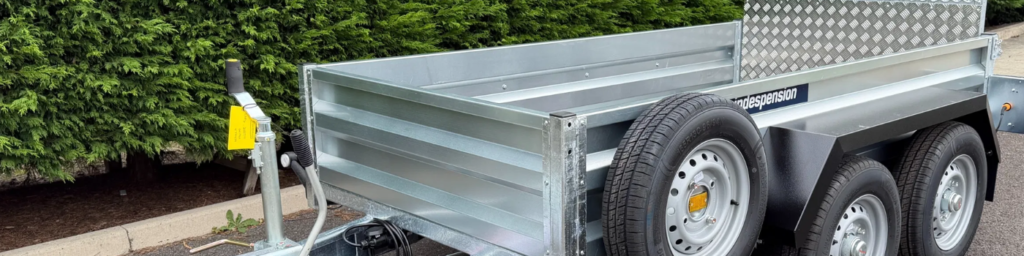
Category BE is the driving licence category covering a Category B vehicle towing a trailer. Under the current GOV.UK rules, drivers who got their car licence from 1 January 1997 can tow a trailer with a MAM of up to 3,500kg under this entitlement.
You may notice that BE isn’t shown on your physical driving licence, particularly if your photocard hasn’t been renewed since the towing rules changed.
That doesn’t necessarily mean you don’t have the entitlement. GOV.UK states that DVLA will add Category BE to the physical driving licence the next time it is renewed. You can check your current vehicle categories using the government’s online driving licence service rather than relying solely on what’s printed on an older photocard.
Again, Category BE describes what your licence permits you to drive. It doesn’t change the manufacturer’s limits for the vehicle you’re using.
What Is MAM and Why Does It Matter?
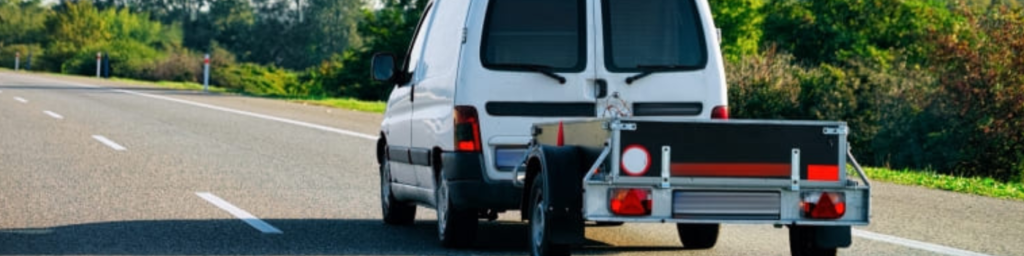
Maximum authorised mass, usually shortened to MAM, is the maximum permitted weight of a vehicle or trailer when fully loaded.
It’s an important term to understand because UK driving licence entitlements are expressed using MAM rather than simply the weight of the trailer when it’s empty.
For example, if a trailer has:
Unladen weight: 900kg
MAM: 3,500kg
its MAM is still 3,500kg even when there’s nothing loaded onto it. You’ll normally find MAM in the owner’s manual or on a plate or sticker fitted to the vehicle or trailer.
MAM is also different from payload, towing capacity and gross train weight (GTW). These figures are closely related, but they don’t mean the same thing. For the purpose of checking your driving licence, the key thing to remember is that MAM refers to the maximum authorised loaded weight, not simply what the trailer happens to weigh on the day you’re towing it.
Your Driving Licence Isn’t Your Vehicle’s Towing Capacity
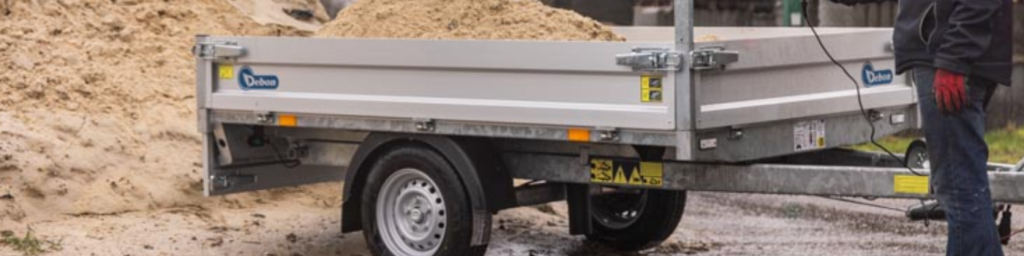
Being licensed to tow a trailer with a MAM of up to 3,500kg doesn’t mean your vehicle can tow 3,500kg.
Most cars have a maximum towing weight specified by the manufacturer. GOV.UK advises checking the vehicle handbook or specification sheet for this information.
You may also find the vehicle’s gross train weight on its VIN plate, normally located under the bonnet or inside the driver’s door. Gross train weight is the permitted weight of the fully loaded towing vehicle and fully loaded trailer combined, and it must not be exceeded. GOV.UK also advises that if the VIN plate doesn’t list a train weight, the vehicle shouldn’t be used for towing.
A useful way to think about it is:
- Your driving licence determines the categories of vehicle and trailer you’re entitled to drive.
- Your tow vehicle determines what that particular vehicle is designed and permitted to tow.
- Your trailer has its own maximum weight and payload limits.
All three need to be compatible!
So, if your licence permits a trailer with a MAM of up to 3,500kg but your car is only rated to tow 2,000kg, your licence entitlement doesn’t increase the car’s towing capacity to 3,500kg.
This distinction becomes particularly important when choosing larger trailers and heavier loads. Understanding the numbers before you buy can prevent you from ending up with a trailer that’s perfectly suitable for the load, but not for the vehicle you intended to tow it with.
What Does This Mean for the Trailer You Want to Tow?
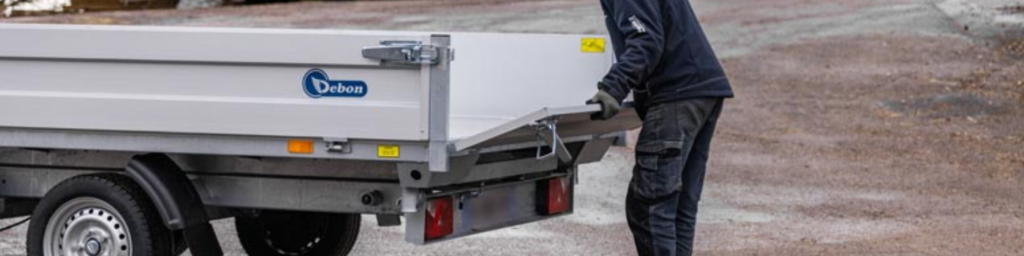
Licence categories and MAM figures make more sense when you put them into the context of a real trailer. The trailer itself is only one part of the calculation. You also need to consider what you’re loading onto it and whether your tow vehicle is suitable for the resulting weight.
Here are a few common examples.
Utility and General Purpose Trailers
Smaller Utility Trailers and General Purpose Trailers are often used for garden waste, tools, DIY materials and lighter equipment.
Some models fall into the unbraked category, while larger versions may be braked. Either way, check the trailer’s MAM alongside your vehicle’s towing limits rather than assuming that a smaller trailer will automatically be suitable.
Payload matters too. If you’re regularly transporting heavier materials or equipment, it’s surprisingly easy for the total loaded weight to increase.
Horse Trailers
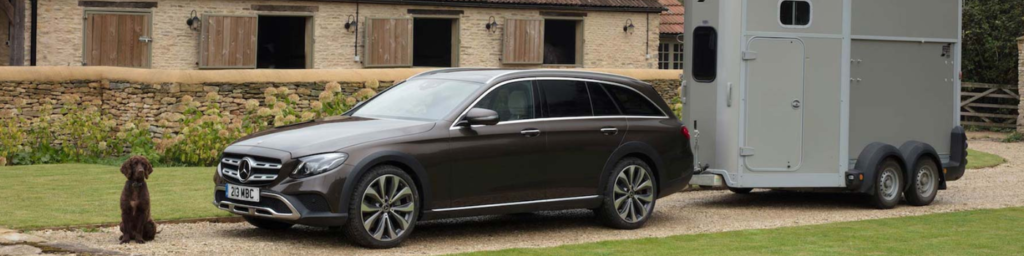
Most Horse Trailers are braked and can have relatively high maximum authorised masses, so checking the complete setup is particularly important.
Don’t consider the trailer alone. You need to account for the horse or horses being transported, any tack or equipment carried in the trailer and the capabilities of your towing vehicle.
If you’re buying your first horse trailer, our Complete Horse Trailer Buying Guide explores the wider decision in more detail, including trailer size, layout, new versus used and choosing a suitable model for your horse.
Car Trailers
With a Car Trailer, the vehicle being transported can make up a substantial proportion of the total load.
A lightweight competition car and a large road car can place very different demands on the same trailer. Before choosing a transporter, check the trailer’s available payload against the weight of the vehicle you intend to carry, then make sure the resulting combination falls within the relevant limits for your tow vehicle and driving licence.
If you’re deciding between different designs, our Open vs Enclosed Car Trailers guide can also help you choose the most appropriate setup for the type of vehicle you’re transporting.
Plant Trailers
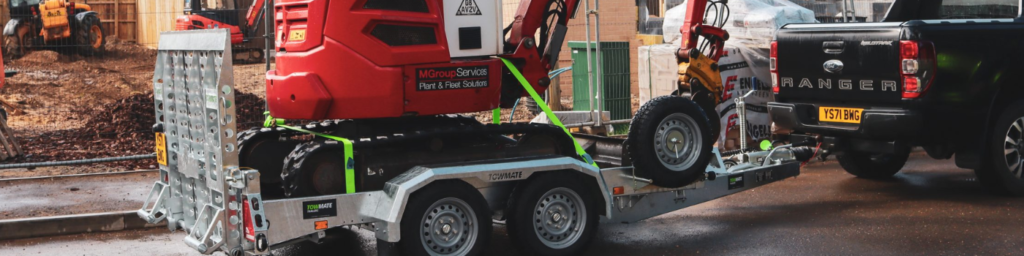
Plant machinery can be deceptively heavy, particularly once buckets, attachments and additional equipment are included.
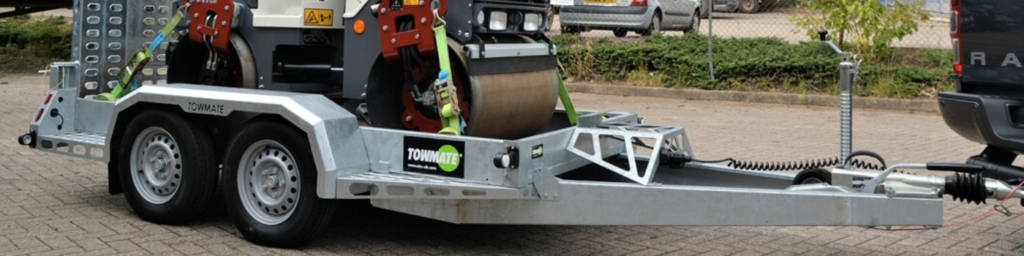
Dedicated Plant Trailers are designed to handle machinery such as mini excavators, dumpers and rollers, but the higher capacities available make it especially important to check what your towing vehicle can handle.
Our How to Choose the Right Plant Trailer guide looks more closely at matching the trailer to your machinery, including options such as Beavertail Trailers and Tiltbed Trailers.
In every case, the principle remains the same: don’t choose a trailer based on licence entitlement alone. Work from the load, trailer and towing vehicle as a complete combination.
Do You Still Need to Take a Trailer Towing Test?
For most drivers towing within their Category BE entitlement, you no longer need to pass the separate car and trailer test that existed under the previous rules.
That doesn’t mean training has no value.
Towing changes the way a vehicle accelerates, brakes, corners and reverses, and handling a large trailer for the first time can be very different from normal driving. This can be especially noticeable with horse trailers, car transporters and larger commercial trailers.
Drivers who are new to towing may therefore choose to undertake practical training even when there is no requirement to pass the old B+E test. GOV.UK provides information on trailer training and recognised training providers as part of its towing guidance.
This is a useful distinction to make: being legally entitled to tow and being confident and competent with a trailer are two different things. For the latest information on licence entitlement and optional training, refer to the official GOV.UK trailer towing guidance.
What If You Need to Tow a Heavier Combination?
The Category B and BE rules cover a large proportion of everyday trailer users, but heavier vehicle and trailer combinations can require additional licence entitlement.
According to GOV.UK, if you need to tow a combination heavier than your current licence allows, you may need to obtain Category C1+E entitlement.
This involves obtaining the relevant provisional entitlement and passing the required theory and practical tests. Once qualified, GOV.UK states that C1+E allows vehicles and trailers with a combined MAM of up to 12,000kg.
This moves beyond the typical car-and-trailer setup, so we’d strongly recommend checking your individual circumstances through GOV.UK before driving a heavier combination.
The important point for trailer buyers is to establish this before choosing equipment. If your intended vehicle, trailer and load take you beyond your existing licence entitlement, changing trailer size alone may not solve the problem.
Does Towing for Work Affect the Rules?
If you’re buying a trailer for your business, holding the correct driving licence remains essential, but it may not be the only requirement that applies.
Commercial towing can introduce additional rules depending on the vehicle, trailer, combination weight, type of work and how the vehicle is being used. For heavier combinations, additional licence categories may be necessary and Driver Certificate of Professional Competence requirements can apply in certain circumstances.
GOV.UK specifically notes that additional Driver CPC tests are required in some circumstances where driving a medium-sized lorry forms the main part of your job.
Rather than assuming that a normal car-and-trailer entitlement covers every commercial situation, check the rules that apply to your particular work and combination.
This is especially relevant when buying larger Plant Trailers, Tipper Trailers or Flatbed Trailers for regular business use, where loads and vehicle combinations can be substantially heavier than those used for occasional domestic towing.
Three Things to Check Before Choosing a Trailer
You don’t need to memorise every towing term before you start shopping. Instead, there are three things worth establishing early.
- Check your driving licence
Find out exactly which categories you’re entitled to drive rather than relying solely on when you remember passing your test. You can check your current entitlement through GOV.UK, which is particularly useful if Category BE isn’t yet displayed on your physical licence.
- Check your towing vehicle
Find the manufacturer’s maximum towing capacity and check the relevant information on the vehicle’s VIN plate. Don’t assume that a large or powerful vehicle can automatically tow a particular trailer. The manufacturer’s stated limits are what matter.
- Check the trailer and your intended load
Look at the trailer’s MAM, unladen weight and available payload, then consider what you’ll actually be carrying.
If you’re transporting machinery or vehicles, use accurate weights wherever possible. For horses and equipment, make sure you’re allowing sufficient capacity for everything travelling inside the trailer rather than calculating around the horse alone.
If the licence, vehicle and trailer don’t work together, choosing a different combination may be necessary.
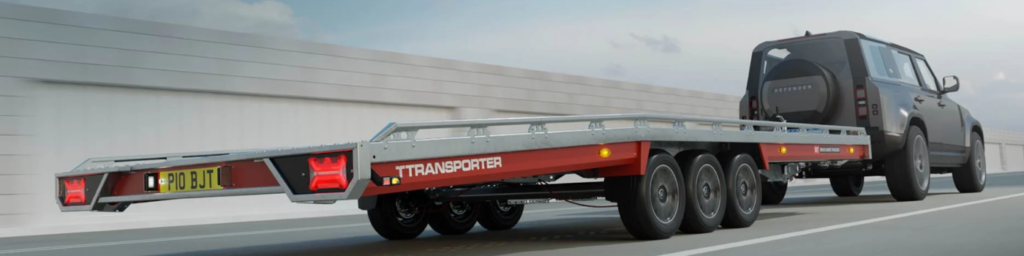
Need a Trailer That Works With Your Vehicle?
Finding the right trailer isn’t simply a case of choosing the biggest model your driving licence allows.
A smaller trailer may comfortably handle everything you need, while another customer may require the payload and dimensions of a larger specialist model. Your tow vehicle, intended load and frequency of use all help determine which option makes sense.
At Cutlers Sales & Hire, we can help you compare Horse Trailers, Car Trailers, Plant Trailers, Box Trailers, Tipper Trailers, Flatbed Trailers, Utility Trailers and other options based on the job you need the trailer to perform.
If ownership isn’t necessary for the amount you’ll use it, Trailer Hire may provide a more practical alternative. We also regularly have Used Trailers available for customers looking for a quality pre-owned option.
For a broader look at choosing between the different trailer types, head to our How to Choose a Trailer Guide. Ultimately, the safest way to choose is to work through the same three checks every time: your licence entitlement, your vehicle’s limits and the specifications of the trailer you want to tow.