
Trailer Security Tips: How to Protect Your Trailer from Theft
A trailer can be a significant investment, whether you use it every day for work, regularly transport horses or vehicles, or only tow occasionally. When it isn’t attached to your tow vehicle, however, it also needs its own security plan.
There is no single lock or security measure that can guarantee a trailer won’t be stolen. A better approach is to think in layers. Making the hitch harder to access, preventing the wheels from turning, restricting access to the trailer and adding tracking where appropriate all create different obstacles.
The right setup will depend on your trailer, where you keep it and how often it’s left unattended. Here’s what to consider.
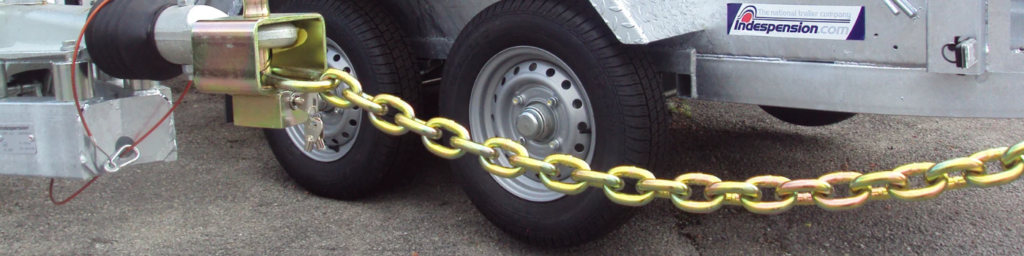
Why Use More Than One Trailer Security Measure?
Different security measures do different jobs. A hitch lock may prevent someone from simply coupling your trailer to another vehicle, but it doesn’t physically immobilise the wheels. A tracker may help locate a trailer after it’s moved, but it doesn’t stop someone moving it in the first place.
That’s why it’s useful to think about trailer security across several areas:
| Security layer | What it does |
| Hitch security | Makes it more difficult to couple the trailer to another vehicle |
| Wheel security | Restricts movement of the trailer |
| Fixed security | Secures the trailer to an appropriate fixed point |
| Storage security | Controls or restricts physical access to the trailer |
| Tracking | Can alert you to movement or help establish its location |
| Identification | Makes it easier to provide accurate trailer details if it is stolen |
You won’t necessarily need every measure in every situation. A trailer stored overnight in a business yard, for example, may need a different setup from one temporarily left unattended during the working day.
The important point is not to assume that one visible lock takes care of trailer security completely.
Cutlers Tip: Combining different types of security means anyone attempting to move the trailer has more than one obstacle to overcome. Think about the hitch, wheels and storage location together rather than relying on one device.
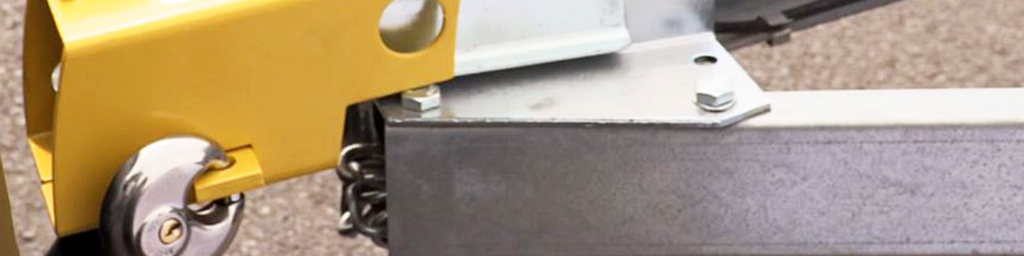
Secure the Trailer Hitch
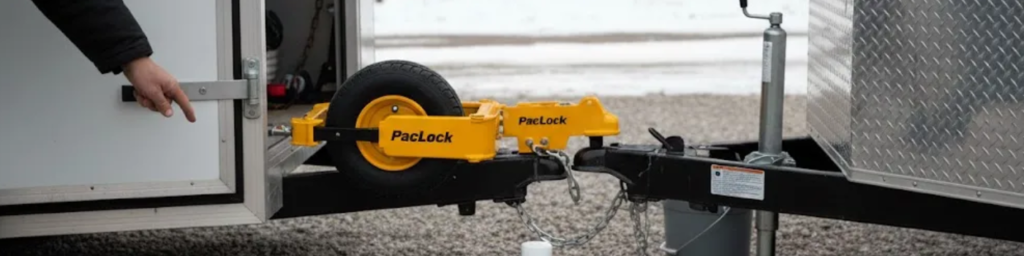
A hitch lock is designed to prevent or restrict unauthorised use of the trailer coupling, making it harder for another vehicle to simply hitch up and tow the trailer away.
There are numerous designs available, so compatibility matters. Before choosing one, check the make and type of coupling fitted to your trailer and make sure the security device is intended for that particular setup. A lock that doesn’t fit or secure correctly offers little reassurance simply because it’s attached to the trailer.
Also consider how you normally use and store the trailer. Some security devices are designed for use when the trailer is unhitched, while others may also be suitable in certain situations when it is coupled to a tow vehicle. Follow the instructions for the individual security device rather than assuming it can be used in either situation.
If your insurer specifies a particular security standard or type of hitch lock, that requirement should also form part of your choice. We’ll look at insurance requirements in more detail later in this guide.
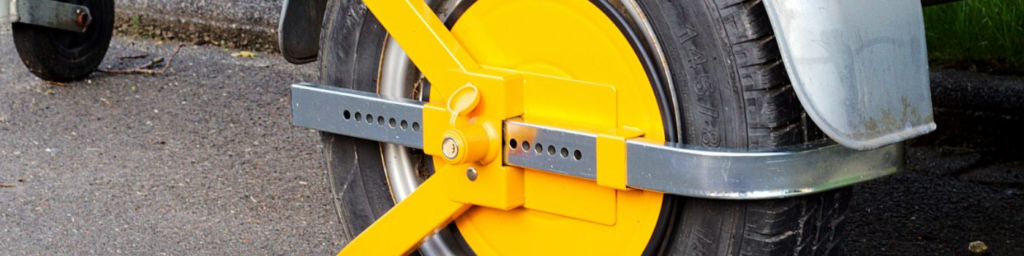
Immobilise the Wheels
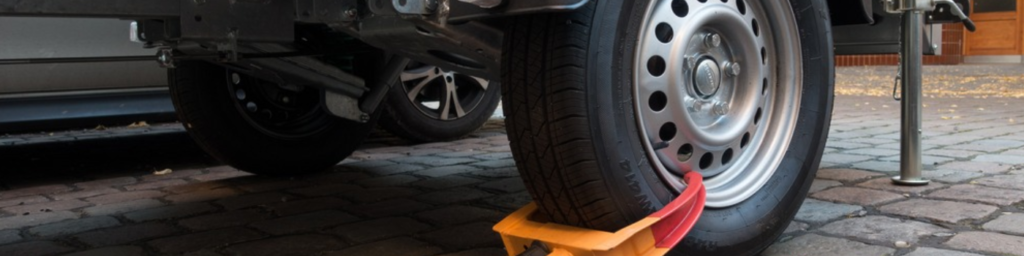
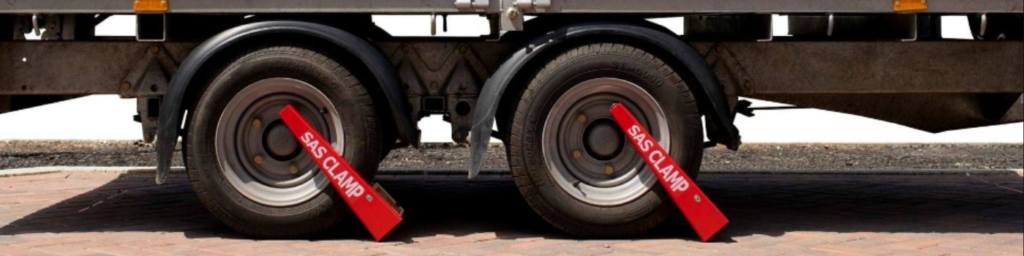
A wheel clamp approaches security differently. Instead of preventing another vehicle from connecting to the trailer, it is designed to prevent the trailer wheel from rotating freely.
That makes a wheel clamp a useful additional layer when a trailer is left unattended, particularly for longer periods.
As with hitch locks, correct fit is important. Wheel and tyre sizes vary between trailers, so check that the clamp is suitable for the wheel it’s being fitted to and use it according to the manufacturer’s instructions.
Visibility can also be useful. A clearly visible physical security measure shows immediately that the trailer cannot simply be hitched up and driven away without first dealing with it.
For many owners, combining hitch and wheel security is a logical starting point because the two devices protect against movement in different ways.
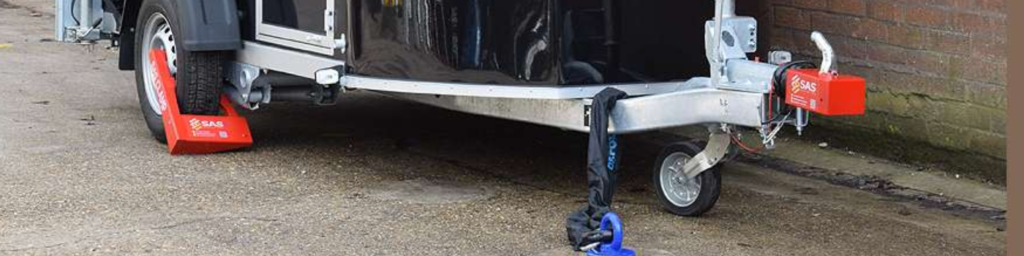
Consider a Fixed Security Point
If your trailer is regularly kept in the same place, you may be able to add another physical barrier by securing it to a suitable fixed point.
Depending on the premises and setup, this could involve a purpose-designed ground anchor, security post or another appropriate fixed security system, used with compatible locking equipment.
This is particularly relevant for trailers stored for longer periods at:
- Home
- Farms and estates
- Business premises
- Workshops
- Storage yards
The aim is to make removing the trailer more difficult even if someone manages to overcome another security measure.
Avoid improvising attachment points on the trailer itself. Security equipment should be compatible with the trailer and installed and used as its manufacturer intends. The same applies to permanent ground anchors or posts, which need to be appropriate for the surface and installation location.
Think About Where You Park Your Trailer
Good trailer security isn’t only about what you attach to it. Where and how you leave the trailer can make a significant difference to how accessible it is.
If you have a choice of storage location, think about the route someone would need to take to reach and remove it. A trailer sitting close to an open entrance is very different from one kept within a controlled area behind a locked gate.
Where practical, consider:
- Restricting vehicle access to the trailer
- Keeping gates and other access points secured
- Positioning the trailer so it isn’t straightforward to hitch up and remove
- Using suitable external lighting around storage areas
- Including the trailer within existing CCTV or site-security coverage
- Avoiding leaving keys for trailers, gates or security devices somewhere obvious or easily accessible
You don’t need to turn your property into a fortress. The aim is simply to avoid making the trailer unnecessarily easy to access.
If you’re keeping a trailer on a farm, yard or commercial site, it’s also worth looking at security as part of the whole premises. A well-secured trailer isn’t much help if access to the storage area itself is routinely left open.
Longer-term storage brings additional considerations around protecting the trailer’s condition, tyres and components.
Can a GPS Tracker Help Protect a Trailer?
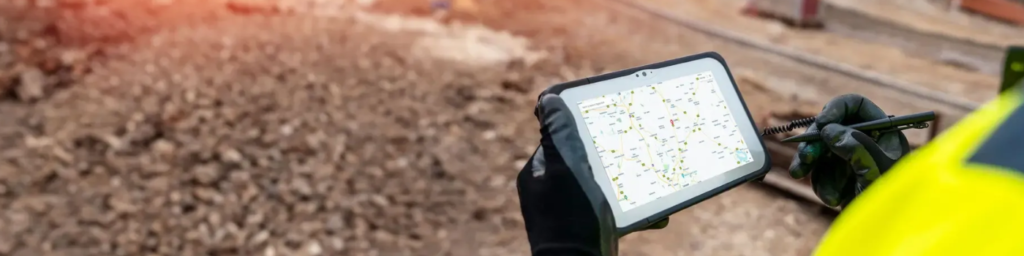
Tracking technology provides a different type of security because it doesn’t physically prevent someone from moving the trailer.
Depending on the system, a trailer tracker may provide features such as:
- Location information
- Movement notifications
- Alerts when the trailer leaves a defined area
- An accessible record of its location
That can make tracking a useful additional layer, particularly for higher-value trailers or those frequently left away from their normal storage location.
However, it shouldn’t be treated as a replacement for physical security. By the time a tracking system alerts you, the trailer may already have been moved. Hitch security, wheel immobilisation and secure storage are designed to make that initial movement more difficult.
If you choose a tracker, think about how it works in day-to-day ownership too. Depending on the system, this might mean checking its battery or power supply, subscription requirements, mobile coverage and whether alerts are configured correctly. A tracker that hasn’t been maintained or set up properly may be of limited use when you actually need it.
It’s also worth checking whether your insurer has any specific requirements relating to tracking equipment rather than assuming that fitting one automatically changes your theft cover.
Make Sure You Can Identify Your Trailer
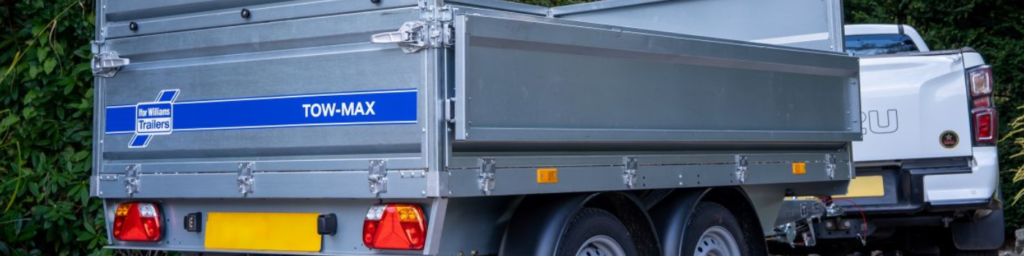
Security isn’t only about preventing a trailer from being taken. You should also have enough information to identify it accurately if it does go missing.
Start by recording the trailer’s VIN or chassis number and any other identifying or serial numbers supplied by the manufacturer. Don’t rely on being able to retrieve these details from the trailer after a theft.
It’s also worth keeping a good photographic record. Take clear pictures from several angles and include any features that distinguish your trailer from another example of the same model. Depending on the trailer, that could include fitted accessories, markings, repairs or other recognisable details.
A simple trailer record could include:
| Information to keep | What to record |
| Manufacturer and model | Exact trailer make and model |
| VIN/chassis number | Full identifying number |
| Registration details | Where applicable |
| Photographs | Front, rear, both sides and identifying features |
| Security equipment | Details and receipts where relevant |
| Insurance | Policy details and contact information |
| Tracker | Provider/account information if fitted |
Keep this information somewhere secure and separate from the trailer. Having it ready means you won’t be trying to piece everything together at a stressful moment if the trailer disappears.
Check Your Trailer Insurance Requirements
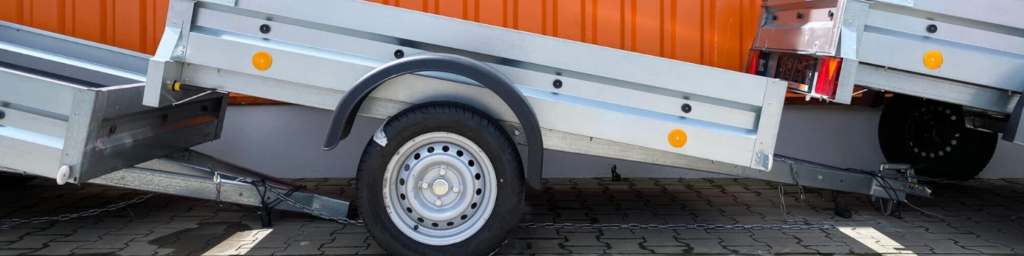
Insurance deserves particular attention because your insurer may have its own requirements for securing and storing the trailer.
Don’t assume that buying a heavy-duty lock automatically means you’ve met the conditions of your policy. Depending on your cover, the insurer may specify the type or security standard of device required, when it needs to be fitted, or conditions relating to where the trailer is stored.
Check your individual policy for requirements covering areas such as:
- Hitch locks or wheel clamps
- Recognised security standards
- Tracking equipment
- Overnight storage
- Locked or secured premises
- What must be fitted when the trailer is unattended
- Evidence you may need following a theft
If anything is unclear, ask the insurer rather than making an assumption.
Keep receipts and relevant documentation for security equipment too. Photographs showing your security setup can also provide a useful record of how the trailer is normally protected.
This is one area where the right approach isn’t necessarily the most expensive one. The important thing is that your security is appropriate for the trailer and satisfies the conditions of your particular insurance cover.
Don’t Forget Trailer Security Away From Home
It’s easy to put plenty of thought into securing a trailer overnight and then become much more relaxed about it when you’re out and about.
- There may be occasions when your trailer is left unattended at an event, work site, hotel, service area or another temporary location. Your normal gates, CCTV or fixed security points may no longer be available, so think ahead about how you’ll secure it.
- Portable physical security becomes particularly useful here. Depending on your setup, that could mean using appropriate hitch and wheel security whenever the trailer is left unattended rather than only when it is stored at home.
- Where you park matters too. If you have a choice, consider visibility, lighting, access and how easily another vehicle could approach the trailer.
- For overnight trips, it’s worth deciding how you’ll secure the trailer before you leave home. Finding out that your usual security setup can’t be used at the destination is much easier to deal with in advance.
What We’ve Learnt
Trailer security is easiest to maintain when it becomes part of your normal routine.
If fitting the hitch lock, securing the wheel and checking the storage area are things you do every time you leave the trailer, there’s less chance of security being forgotten because you’re in a hurry. That matters just as much for trailers used regularly as those kept in storage for weeks at a time.
A Simple Trailer Security Checklist
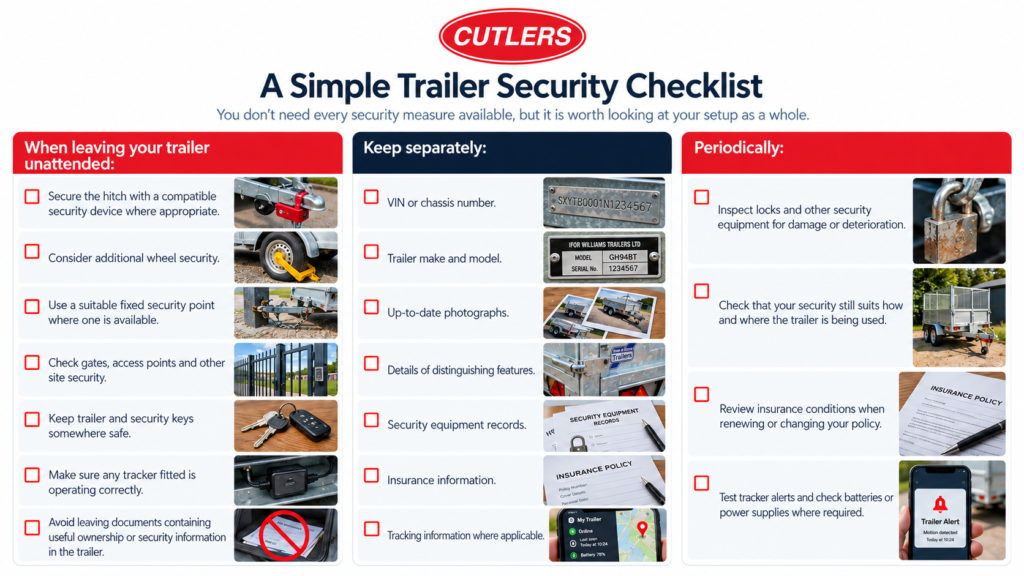
Security equipment isn’t much use if it has become damaged, no longer fits properly or hasn’t been used consistently.
What Should You Do If Your Trailer Is Stolen?
Even with sensible precautions in place, no trailer security setup can guarantee that theft won’t happen.
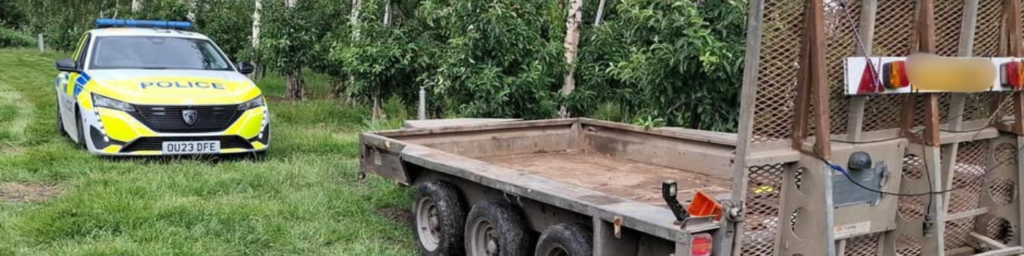
If you discover that your trailer has been stolen, report the theft to the police as soon as possible and provide as much identifying information as you can. This is where the record you’ve kept becomes particularly valuable.
Give them details such as the make and model, VIN or chassis number, photographs and any obvious identifying features. If tracking equipment is fitted, tell the police that location information may be available and follow the appropriate process for sharing it.
Contact your insurer promptly too and follow its claims procedure. Have your policy details and any relevant records of the trailer and security equipment available.
Most importantly, don’t put yourself at risk attempting to recover a stolen trailer personally. If a tracker indicates where it has been taken, pass that information to the police rather than confronting anyone yourself.
Make Trailer Security Part of Everyday Ownership
Protecting a trailer isn’t about finding one lock and assuming the job is done. A stronger approach combines physical security, sensible parking, controlled access, identification and tracking where appropriate.
Your setup doesn’t have to be complicated. What matters is understanding the weak points around your particular trailer and making it less straightforward to access and move.
Think about security whenever the trailer is left unattended, not only when it’s being put away for a long period. Keep your identifying information somewhere safe, check what your insurer expects and make sure the equipment you rely on is still fit for purpose.
Security is also only one part of looking after a trailer. Our How to Maintain Your Trailer: A Complete Guide covers the ongoing checks and maintenance that help keep it safe and reliable.