How to Choose the Right Tipper Trailer
Choosing the right tipper trailer comes down to more than bed size and carrying capacity. The materials you transport, how you load them and where you need to unload can all influence which model is best suited to your work.
For builders, landscapers, agricultural users and contractors, a well-chosen tipper trailer can make handling loose materials considerably easier. However, there are important differences between models, particularly when it comes to payload, tipping direction, hydraulic operation and loading arrangements.
At Cutlers Sales & Hire, we offer a range of tipper trailers from established manufacturers including Debon and Nugent. In this guide, we’ll explain the specifications worth comparing and help you narrow down the options before buying.
Choosing a Tipper Trailer for Your Work
The best place to start is with the loads you transport most frequently. A tipper used for moving aggregate and rubble may need a different specification from one regularly carrying green waste, timber or landscaping materials.
Although most tipper trailers are designed around the same basic principle, differences in body size, payload and loading arrangements can make certain models more practical for particular jobs.
| Typical load | What to prioritise |
| Soil, aggregate and rubble | Payload capacity, body construction and tipping performance |
| Green waste, woodchip and other bulky materials | Body volume and suitable side extensions |
| Building materials and palletised goods | Bed dimensions, removable sides and loading access |
| Suitable compact machinery | Rated loading ramps, payload and securing arrangements |
For example, a landscaping business regularly transporting soil and aggregate may benefit from a compact tipper with sufficient payload and straightforward rear discharge. A contractor working across different sites might place greater value on removable sides, flexible loading access or the ability to tip in more than one direction.
It’s worth thinking about the equipment you already use for loading, too. A trailer regularly loaded by a compact excavator has different practical requirements from one loaded by hand or with a forklift.
Payload, Body Dimensions and Towing Capacity
Payload is one of the most important specifications to compare when buying a tipper trailer, particularly if you’re regularly carrying dense materials.
A large tipping body doesn’t necessarily mean a trailer can carry more weight. Soil, aggregate and rubble can reach the trailer’s permitted payload well before the body is full, so choosing purely by bed dimensions can be misleading.
The maximum authorised mass (MAM) is the maximum permitted weight of the trailer and its load combined. The payload is the weight available for cargo after accounting for the trailer’s unladen weight.
When comparing models, consider:
Payload capacity: Sufficient for the heaviest loads you regularly transport.
Bed length and width: Suitable for your materials and loading equipment.
Side height: Practical for loading, while providing suitable containment for the intended materials.
Towing compatibility: Within your vehicle’s towing limits and the applicable combination requirements.
Axle configuration: Appropriate for the trailer’s design, rated capacity and intended use.
For lighter, bulkier materials such as hedge cuttings or woodchip, additional body volume may be more useful than a particularly high payload. Suitable mesh extensions can be worth considering for this type of work.
With heavier materials, carrying capacity is usually the more pressing consideration.
Remember to check the towing vehicle’s permitted limits and your driving licence entitlement before purchasing. Our guides to trailer weights and towing licence requirements cover these considerations in more detail.
Rear Tipping vs Three-Way Tipping: What’s the Difference?
One of the main decisions when choosing a tipper trailer is whether you need a conventional rear-tipping design or the additional flexibility of three-way tipping. Both configurations are available within the Debon range supplied by Cutlers, giving buyers options depending on their unloading requirements.
Rear Tipping Trailers
A rear tipper raises the front of the body to discharge material behind the trailer.
This is a practical arrangement for general construction, landscaping and agricultural work, particularly where there’s sufficient space to position the trailer for unloading.
Rear tipping is often all that’s required when moving soil, aggregate, rubble or similar materials between locations with straightforward unloading access.
Compact models such as the Debon PW0.1 provide an example of a rear-tipping design suited to buyers who don’t require the additional unloading directions of a larger three-way tipper.
Three-Way Tipping Trailers
A three-way tipper can discharge material to the rear or either side, depending on its configuration.
This can be particularly useful where unloading space is restricted or materials need to be deposited alongside the trailer rather than directly behind it. For groundwork, landscaping and certain agricultural applications, the additional tipping directions can reduce the need to reposition the trailer.
The Debon PW2.4 is an example of a three-way tipping trailer available through Cutlers, offering a different configuration for buyers who need greater unloading flexibility.
Three-way tipping isn’t automatically the better choice, however. If most of your work involves straightforward rear discharge, a conventional rear tipper may provide everything you need.
Whichever design you choose, tipping must be carried out in accordance with the manufacturer’s instructions, with particular attention to ground conditions, stability and overhead clearance.

Hydraulic Operation, Loading Ramps and Useful Features
Once you’ve established the right capacity and tipping configuration, it’s worth looking at the equipment fitted to individual models. Some features can make a considerable difference to how convenient a trailer is to use, particularly when it’s working regularly across different sites.
Electric Hydraulic Tipping and Manual Pump Options
Many modern tipper trailers use an electric hydraulic system to raise the body, allowing the operator to control the tipping action without manually pumping the hydraulic mechanism. This can be particularly useful for businesses that regularly unload materials throughout the working day.
Some models also offer a manual hand pump option, which can provide an alternative means of operating the hydraulic system. For example, the Debon PW0.1 features electro-hydraulic operation, with a manual hand pump available as an option.
When comparing trailers, check the hydraulic equipment fitted to the particular model, including its controls, battery arrangement and any available manual operation.
Dropsides, Loading Ramps and Body Extensions
Loading arrangements are equally important, especially if your trailer will carry more than loose materials. Removable dropsides can improve access when loading palletised goods or equipment, while suitable loading ramps may allow certain compact machines to be transported.
However, ramps must be correctly rated for the equipment being loaded, and the trailer must be approved for the intended load.
Other options worth considering include:
- Mesh side extensions: Useful for suitable lightweight, bulky loads such as green waste.
- Tailgate arrangements: Different opening and discharge options depending on the model.
- Load-securing points: Important when transporting equipment or materials that require restraint.
- Spare wheels and storage options: Practical accessories for regular commercial use.
Not every feature will be necessary for every buyer. A contractor primarily moving aggregate may have different priorities from a landscaper carrying a mixture of materials and equipment.
The important thing is choosing the equipment you’ll actually use rather than adding accessories simply because they’re available.
Comparing Debon and Nugent Tipper Trailers
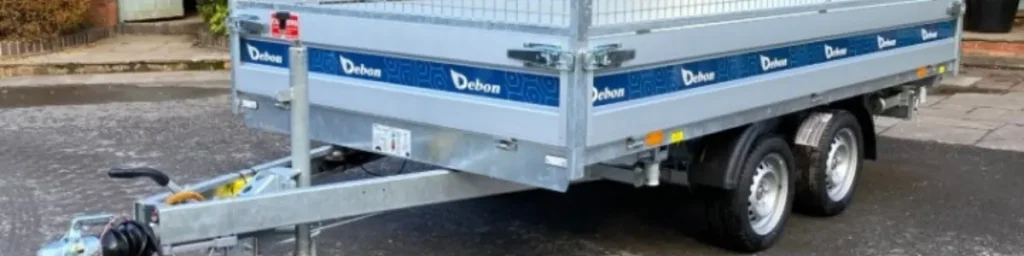
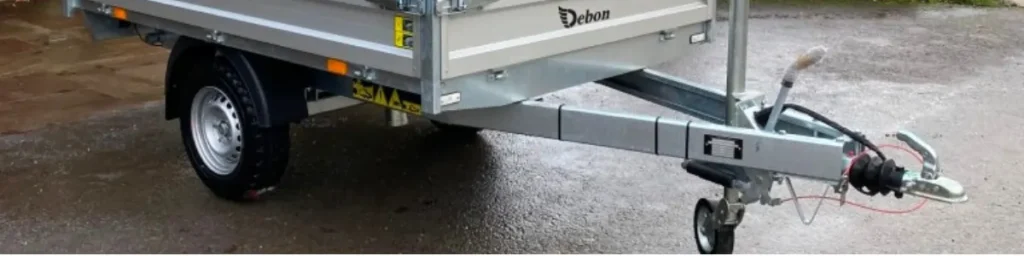
At Cutlers Sales & Hire, we supply tipper trailers from Debon and Nugent, with different sizes, capacities and configurations available across the ranges. Debon offers both rear-tipping and three-way tipping options, including compact single-axle designs and larger twin-axle models. This gives buyers a choice of configurations depending on their payload and unloading requirements.
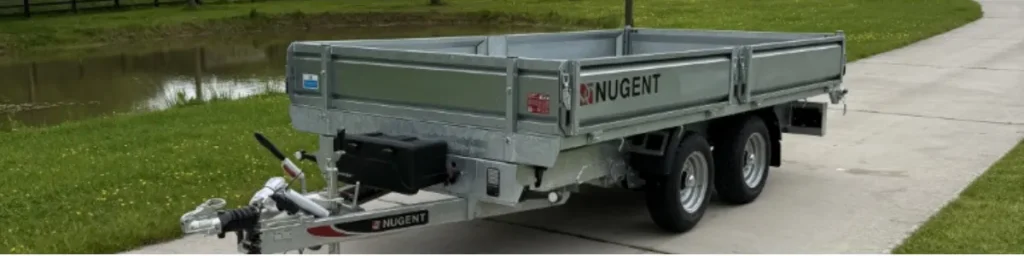
Nugent also manufactures tipper trailers for professional and agricultural applications, with models designed around practical loading and material-handling requirements.
Rather than choosing between the two manufacturers based on brand alone, we’d recommend comparing the specifications of individual trailers. Look at the usable payload, body dimensions, tipping arrangement, loading access and any accessories you may need. These details will tell you far more about whether a particular trailer is suitable for your work.
Our team can help you compare the available Debon and Nugent tipper trailers, taking into account your towing vehicle, typical loads and working requirements.
Find the Right Tipper Trailer at Cutlers Sales & Hire
Whether you’re looking for a compact rear tipper or a larger model with three-way tipping, choosing the right specification will help you get more practical use from your investment. At Cutlers Sales & Hire, we’re a family-run trailer dealership based in Derby, supplying tipper trailers from established manufacturers including Debon and Nugent.
We can help you compare payload capacities, body dimensions, hydraulic systems and loading arrangements to find a trailer suited to your requirements. We also provide trailer servicing and repairs, offering ongoing support beyond the initial purchase.
Explore our current range of tipper trailers for sale, or contact the Cutlers team for advice on choosing the right model for your work.