
Which Cheval Liberte Horse Trailer Is Right for You?
Cheval Liberte offers horse trailers for everything from travelling a single horse to transporting several horses, tack and even a carriage. With different sizes and layouts available, choosing the right model comes down to your horses, how they prefer to travel and what you need from the trailer.
Rather than choosing on model name alone, start with the basics: how many horses will you regularly transport, how big are they, and would a forward-facing or herringbone layout suit your requirements?
This guide compares the main options available from Cutlers to help you narrow down the Cheval Liberte horse trailer that best fits the job. You can also browse the full Cheval Liberte Trailers range if you’re ready to see what’s currently available.
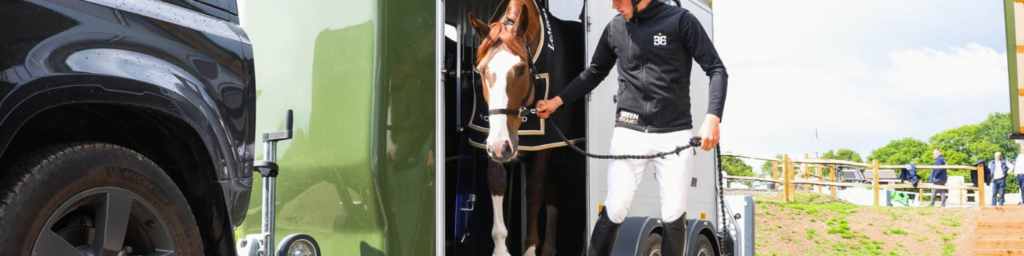
Cheval Liberte Horse Trailers at a Glance
If you already have a good idea of what you need, this is a useful starting point:
| Your requirements | Cheval Liberte model/range to consider |
| Regularly transporting one horse | Touring One |
| Two horses in a forward-facing layout | Touring Country |
| Larger horses in a forward-facing layout | Touring XL |
| Two horses with a herringbone layout | Maxi 2 |
| Three horses / greater capacity | Maxi 3 |
| Larger multi-horse requirements | Maxi 4 |
| Horse transport with living accommodation | Maxi Living |
| Transporting a horse and carriage | Gold / carriage range |
The number of horses is only part of the decision. Horse size, internal layout, storage, payload and your tow vehicle can all affect which model is most suitable.
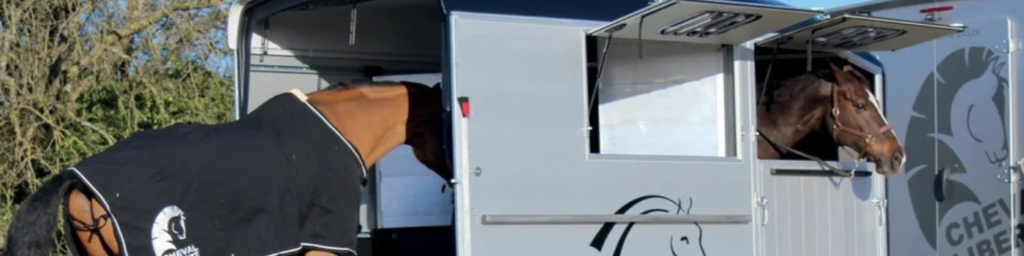
How Many Horses Do You Regularly Transport?
Start with what you’ll be transporting most often, rather than buying more trailer than you realistically need.
Travelling With One Horse
If you regularly travel one horse, a dedicated single horse trailer can make a lot of sense. The Cheval Liberte Touring One is designed specifically around single-horse transport. Compared with buying a larger two-horse trailer purely for occasional extra capacity, a single trailer gives you a more compact combination to tow, store and manoeuvre.
A single-horse layout can also provide generous individual stall space, making it worth considering for owners of larger horses or those who simply don’t need two separate stalls.
Before choosing one, think about whether your requirements are likely to change. If you expect to regularly travel a second horse in the future, moving into the double-horse range may give you more flexibility.
Travelling With Two Horses
For two horses, you have more choice.
Cheval Liberte offers both forward-facing and herringbone configurations, so the decision isn’t simply about finding a trailer with two spaces.
The Touring range provides the more traditional forward-facing option, with models including the Touring Country and larger Touring XL. Alternatively, the Maxi 2 moves into Cheval Liberte’s herringbone range.
This means the next question should be less about capacity and more about which layout works best for the horses you transport.
Travelling With Three or More Horses
If you regularly need to transport several horses or ponies, the Cheval Liberte Maxi range is where the additional capacity comes in.
The range progresses through the Maxi 2, Maxi 3 and Maxi 4, giving buyers options for different numbers and sizes of horses. The herringbone configuration and adjustable internal layout also make these trailers worth considering where your transport requirements regularly change.
At this size, don’t look at horse capacity in isolation. You also need to consider the combined weight of the horses, equipment and trailer, as well as what your towing vehicle can safely handle.
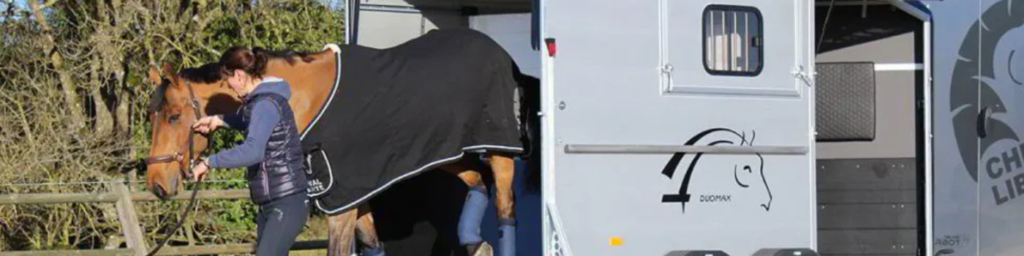
How Big Are Your Horses?
A trailer being described as suitable for one, two or three horses doesn’t automatically mean every horse will be equally well accommodated.
Horse size should be one of your main considerations when comparing models.
Look at the manufacturer’s stated horse capacity alongside the usable stall dimensions and headroom. If you’re transporting larger horses, the extra internal space offered by moving up a model can be more important than the number of stalls alone.
This is particularly relevant when comparing the Touring Country and Touring XL.
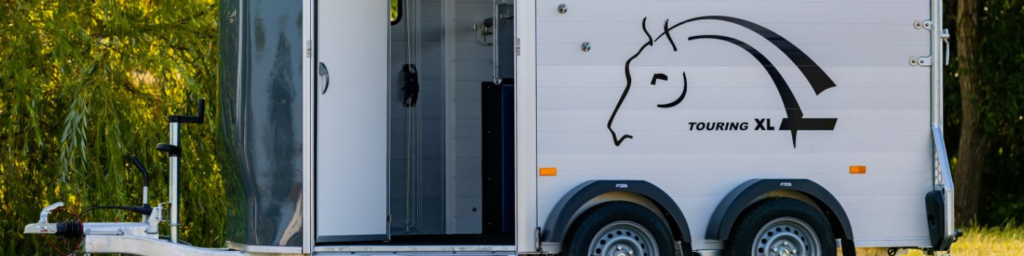
Touring Country or Touring XL?
Both sit within the forward-facing Touring range, but they’re designed to accommodate different requirements. The Touring Country provides two-horse forward-facing transport and is a strong starting point for buyers who want a conventional double-horse layout.
The Touring XL provides additional space for larger horses, making it the model to consider if the standard Touring dimensions don’t provide enough room for the horses you regularly travel.
Rather than automatically choosing the larger trailer, compare the dimensions and stated horse capacity against your actual requirements. A larger model will also affect the overall size and weight of the towing combination.
If you’re unsure between the two, this is exactly the type of comparison where speaking to the Cutlers team with the size and number of horses you transport can quickly narrow down the choice.
Forward-Facing or Herringbone Horse Trailer?
Once you move beyond single-horse transport, layout becomes one of the biggest differences within the Cheval Liberte range.
Forward-Facing
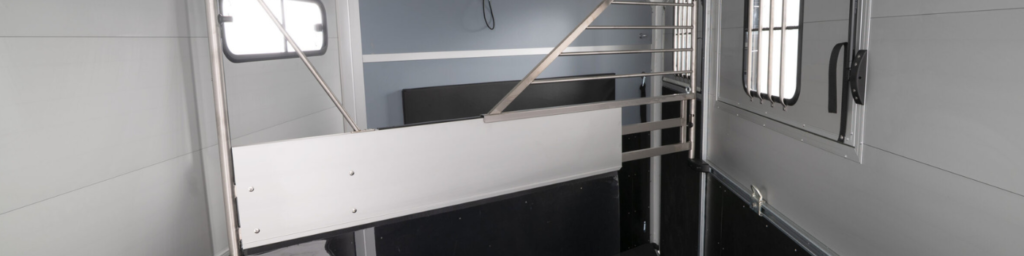
In a forward-facing trailer, the horses travel facing towards the front of the trailer in individual stalls. This is the layout you’ll find across the relevant Touring models, including the Touring Country and Touring XL.
It is a straightforward choice for buyers looking for a conventional two-horse arrangement, with the Touring models offering different options depending on horse size and the space required.
Herringbone
In a herringbone trailer, the horses stand diagonally rather than directly facing forwards. This is the layout used across the Cheval Liberte Maxi range. Depending on the model, it allows multiple horses to be accommodated within the trailer and provides greater flexibility for buyers moving beyond a conventional two-horse configuration.
The Maxi range also uses adjustable internal partitions, which can be particularly useful if you regularly transport horses of different sizes or your requirements change from one journey to the next.
| Feature | Forward-Facing | Herringbone |
| Relevant range | Touring | Maxi |
| Travel position | Facing forwards | Diagonal |
| Best suited to | Conventional one/two-horse transport | Flexible multi-horse transport |
| Capacity options | Model dependent | Maxi 2, Maxi 3 and Maxi 4 options |
| Consider if | You want a straightforward forward-facing layout | You need more flexibility or greater horse capacity |
There isn’t one layout that’s automatically right for every horse or owner. The better choice depends on how many horses you’re travelling, their size and the configuration you need inside the trailer.
How Much Flexibility Do You Need?
Not every journey looks the same. You might regularly transport horses of different sizes, travel with fewer horses on some occasions or need more usable space inside the trailer.
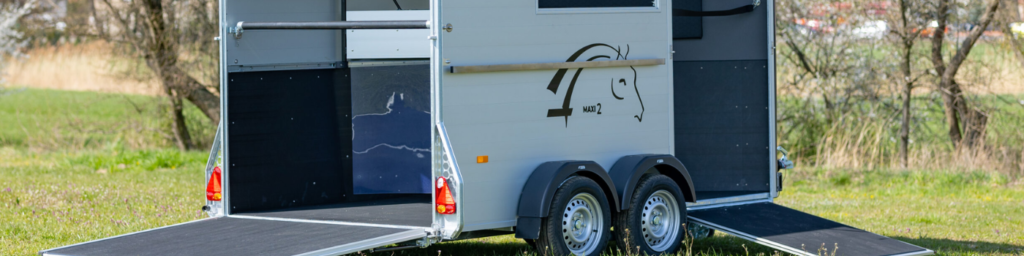
This is where the Cheval Liberte Maxi range becomes particularly useful. Its herringbone layout and adjustable partitions provide more flexibility than a fixed stall arrangement, allowing the available space to be configured around different transport requirements.
That flexibility is worth considering if you:
- Regularly transport different horses
- Need to accommodate horses and ponies of different sizes
- Sometimes travel fewer horses and want additional space
- Need a trailer that can adapt as your requirements change
Don’t pay for flexibility you won’t use. If you consistently transport the same one or two horses and a Touring model provides the space you need, the simpler layout may be perfectly suitable.
Do You Need Tack Storage?
Tack storage can quickly become important if you’re travelling regularly, particularly for competitions, shows or longer days away.
Think about what you normally take with you. Saddles, bridles, grooming equipment and other essentials all need somewhere secure to travel without unnecessarily taking up space in the horse area.
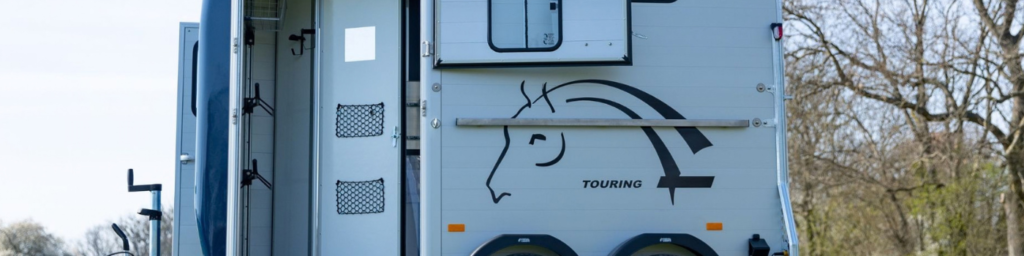
Storage options vary across the Cheval Liberte range. Touring models can be available with additional tack storage, while the larger Maxi trailers provide dedicated storage options suited to owners travelling with several horses and more equipment.
When comparing models, consider:
- How much equipment do you actually carry? A large tack area may be unnecessary for occasional local journeys.
- How easy is the storage to access? Think about what you’ll need before, during and after travelling.
- Will your requirements increase with more horses? Moving from one or two horses to several generally means considerably more equipment too.
It’s a relatively simple feature, but for anyone regularly travelling to events, good tack storage can make a noticeable difference to how practical a trailer is to use.

Do You Need Living Accommodation?
For owners regularly staying away at shows, competitions or events, horse capacity isn’t necessarily the only consideration.
The Cheval Liberte Maxi Living combines multi-horse transport with dedicated living accommodation, making it a more specialised option within the range. This is worth considering if overnight stays are a regular part of how you use your trailer. If they aren’t, a standard Maxi model may give you the horse capacity and storage you need without moving into a larger living configuration.
The key question here is frequency. Choose living accommodation because you’ll genuinely use it, rather than simply because it’s available.
Are You Transporting a Horse and Carriage?
Carriage driving creates a very different transport requirement.
You need suitable accommodation for the horse as well as a practical way of transporting the carriage and associated equipment. Trying to solve those requirements separately can mean additional vehicles or trailers.
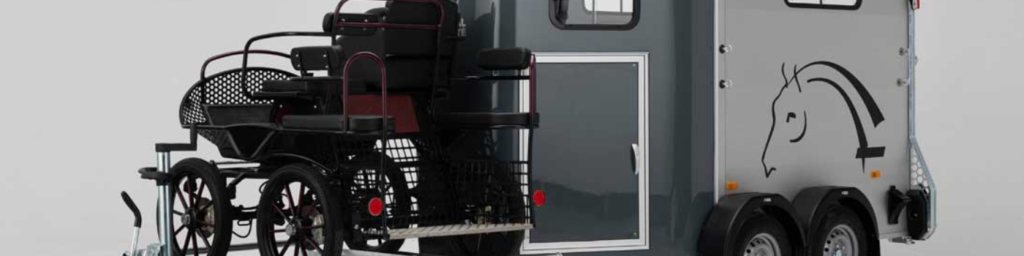
Cheval Liberte produces dedicated Carriage Trailers designed around transporting both, with models featuring a carriage platform alongside the horse accommodation.
For anyone regularly travelling to driving events, this purpose-built arrangement is likely to make much more sense than choosing a conventional horse trailer and then trying to accommodate the carriage separately.
Cutlers stocks Cheval Liberte carriage options including models from the Gold range, so it’s worth comparing the available configurations against the size of your horse, carriage and equipment.
Check Your Tow Vehicle Before Choosing a Larger Trailer
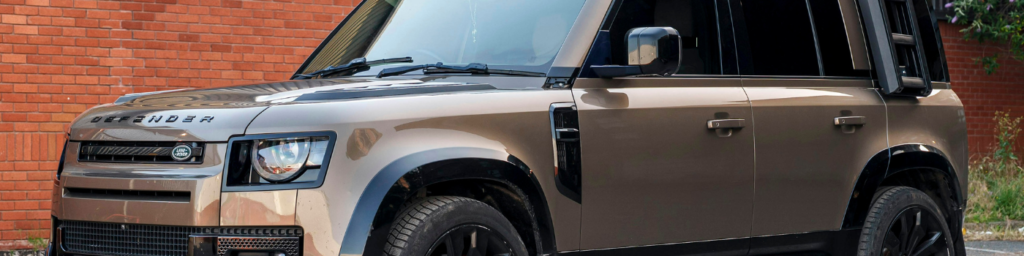
Once you’ve narrowed down the horse trailer you want, make sure your tow vehicle is suitable for it. This becomes particularly important as you move from a compact single-horse trailer towards larger Maxi, living or carriage configurations.
You need to account for more than the trailer’s empty weight. Your actual loaded trailer can include:
- Horse or horses
- Tack and equipment
- Feed and other supplies carried in the trailer
- Carriage, where applicable
- Any other equipment being transported
The trailer must have sufficient payload for everything you’re carrying, while the resulting loaded weight also needs to work within the limits of your tow vehicle.
Our Trailer Weights Explained: Payload, GTW and Towing Capacity guide takes you through these calculations in detail. You can also check What Driving Licence Do You Need to Tow a Trailer? if you’re unsure about your towing entitlement.
Which Cheval Liberte Horse Trailer Should You Choose?
By this point, the choice should be considerably narrower.
Travelling one horse regularly?
Start with the Touring One and compare its dimensions and capacity with your horse.
Travelling two horses forward-facing?
Look at the Touring Country, moving towards the Touring XL where additional space is required for larger horses.
Prefer a herringbone layout?
The Maxi range is the place to start, with different models available depending on the number and size of horses you’re transporting.
Need greater multi-horse capacity?
Compare the Maxi 3 and Maxi 4 against your regular travelling requirements rather than simply choosing the largest option.
Regularly staying away with your horses?
Consider whether the additional facilities of Maxi Living would make competition and event travel more practical.
Transporting a horse and carriage?
Look towards Cheval Liberte’s dedicated Carriage Trailers rather than a conventional horse-only configuration.
If you’re still between two models, concentrate on the differences that will affect you every time you travel: horse space, layout, payload, storage and the suitability of your tow vehicle.
Find Your Cheval Liberte Horse Trailer at Cutlers
Cutlers stocks a wide selection of Cheval Liberte Trailers, covering everything from compact single-horse transport through to double-horse, herringbone, living and carriage configurations.
If you’re still at the earlier stages of deciding what you need, our Horse Trailer Buying Guide covers the wider considerations involved in choosing a horse trailer. The Cutlers team can also help you compare individual Cheval Liberte models based on the number and size of horses you’re transporting, the layout you prefer and the vehicle you’ll be towing with.
The best model isn’t necessarily the biggest or most extensively equipped. It’s the one that gives your horses the space they need and gives you the right capacity and practical features for the journeys you actually make.