The Best Trailers for Farmers and Agricultural Work
A good farm trailer needs to be up to the job, whether that’s regular livestock transport, moving machinery or carrying equipment around the farm. With different trailer designs, loading arrangements and weight capacities available, choosing the right model comes down to finding something that suits your workload and will stand up to regular use.
At Cutlers Sales & Hire, we supply a range of trailers suitable for agricultural work, including models from established manufacturers such as Nugent, Debon and Cheval Liberte. From versatile general purpose trailers to specialist livestock and tipper models, we can help you compare the features that matter and find a trailer that meets your requirements.
In this guide, we’re looking at the best trailers for farming, the practical differences between them and what to consider when choosing equipment for your farm, smallholding or agricultural business.
Choosing a Trailer for Agricultural Work
Most farmers already have a good idea of what they need their trailer to carry. The more important decision is finding a model with the right specification, loading arrangements and build quality for the work involved.
A trailer used regularly for livestock transport will have very different requirements from one carrying machinery or loose materials. Even within the same trailer category, differences in dimensions, payload, flooring, ramp design and available accessories can make one model more suitable than another.
It’s worth looking beyond the headline specifications and considering how the trailer will perform in everyday use.
For example, will the loading arrangement suit your existing equipment? Are the sides and tailgate practical for the materials you regularly transport? Is the trailer easy to clean and maintain? And will it fit comfortably through the gateways, yards and access routes you use?
The right answers will depend on your operation, but these are the details worth comparing before settling on a particular model.
Which Trailers Are Best for Different Farming Jobs?
There are several trailer types worth considering for agricultural use, each offering different advantages depending on the load and working environment.
| Trailer type | Typical agricultural use | Features worth comparing |
| Livestock trailers | Transporting sheep, cattle and other suitable livestock | Flooring, ventilation, partitions and loading arrangements |
| General purpose trailers | Farm supplies, tools, fencing materials and mixed equipment | Payload, removable sides, ramp options and load space |
| Utility trailers | Smaller equipment and routine maintenance work | Dimensions, loading access and ease of handling |
| Tipper trailers | Soil, aggregate and suitable loose materials | Tipping mechanism, body construction and payload |
| Quad trailers | Transporting ATVs and suitable compact equipment | Ramp design, loading angle, bed dimensions and securing points |
The best option isn’t necessarily the most specialised trailer available. For some farms, a versatile general purpose model will cover most regular jobs. Others will benefit from a dedicated trailer designed around a particular load.
Livestock Trailers: Flooring, Ventilation and Safe Loading
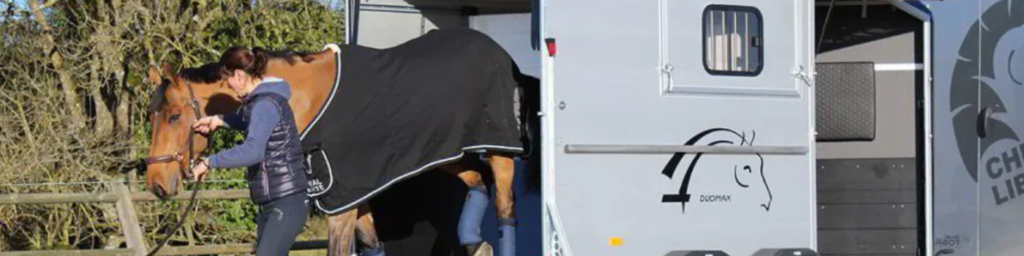
When comparing livestock trailers, the details of the interior and loading arrangements deserve just as much attention as the overall dimensions.
Floor construction is particularly important. It needs to provide a suitable surface for the animals being transported while being durable enough for regular cleaning and use. Non-slip flooring, drainage and the condition of the floor structure are all worth checking.
Ventilation and internal layout also matter. Depending on the model, adjustable partitions and dividing gates can help accommodate different livestock loads, while suitable access arrangements can make handling and unloading more straightforward.
A few features worth comparing include:
- Flooring: Suitable grip, durability and ease of inspection and cleaning.
- Partitions: Practical internal divisions appropriate for the animals being transported.
- Loading arrangements: Ramp design, grip and access suited to the livestock involved.
- Ventilation: Adequate airflow and suitable openings for the intended journeys.
- Cleaning and maintenance: Accessible interior surfaces and components that can be inspected regularly.
Manufacturers such as Cheval Liberte offer livestock transport options, with different designs and specifications to consider. At Cutlers, we can help you compare our available livestock trailers and their features, taking into account the animals you transport and how frequently the trailer will be used.
General Purpose Trailers: Versatility Without Compromising on Capacity
A general purpose trailer can be one of the most useful pieces of transport equipment on a farm, particularly where the loads change throughout the week.
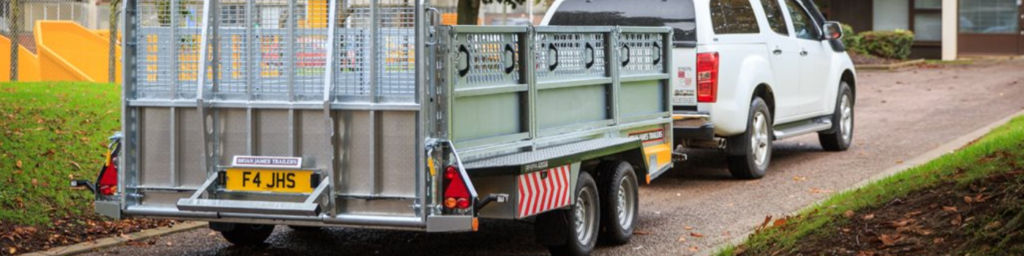
For agricultural use, we’d pay close attention to payload, bed dimensions and the loading arrangements available. A trailer with a generous loading area isn’t necessarily the best choice if its carrying capacity doesn’t match the equipment or materials you regularly transport. Side construction and tailgate options are also worth comparing. Depending on the model, removable sides can make loading bulky items easier, while mesh extensions provide additional containment for suitable lighter loads.
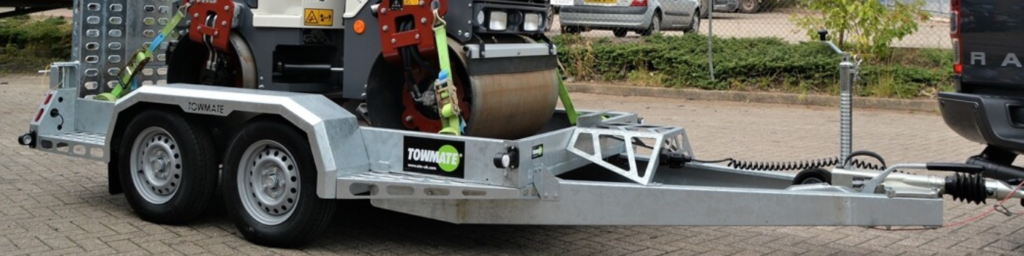
For farms regularly transporting wheeled equipment, a suitable ramp tailgate may be particularly useful. However, it’s important to check the ramp’s rated capacity and loading angle rather than assuming it will accommodate every machine.
Nugent general purpose trailers are among the options worth considering, with configurations designed for a variety of commercial and agricultural applications.
The advantage of this type of trailer is flexibility. If you’re regularly moving tools, fencing supplies, feed and smaller equipment, a general purpose model may provide the versatility you need without investing in several specialist trailers.
Utility Trailers: Practical Options for Smaller Loads
For farms, smallholdings and estate maintenance teams that don’t always need a large trailer, utility trailers are another option worth exploring. These trailers can be well suited to carrying smaller equipment, tools and maintenance supplies, particularly where manoeuvrability and convenient loading are priorities.
The main things to compare are the usable loading dimensions, payload and body design. A compact trailer may be easier to handle in restricted spaces, but it’s still important to make sure it offers enough capacity for the loads you intend to carry.
Loading height, tailgate arrangements and available accessories can also make a difference. There’s some overlap between utility and general purpose trailers, and manufacturers don’t always use these descriptions in exactly the same way. We’d recommend comparing the actual specifications rather than choosing based on the category name alone.
For lighter agricultural work, the right utility trailer can be a straightforward, versatile option without taking up more space than necessary.
Tipper Trailers: Built for Moving Loose Materials
For regular transport of soil, aggregate, stone and other suitable loose materials, tipper trailers offer a clear advantage over conventional fixed-bed designs. The hydraulic tipping mechanism allows the load to be discharged without relying entirely on manual unloading. However, there’s more to choosing a tipper than the tipping function itself.
Body construction, payload, tipping arrangement and access to the load bed are all important considerations.
When comparing models, we’d suggest looking at:
- Tipping mechanism: Hydraulic operation and the arrangement used to raise and lower the body.
- Payload capacity: Particularly important with dense materials such as stone and aggregate.
- Body construction: The durability of the floor, sides and tailgate.
- Loading access: Whether the trailer can accommodate the equipment used to load it.
- Tailgate arrangements: How the material will be discharged and whether the design suits your usual loads.
One point worth remembering is that heavy materials can take a trailer close to its payload limit long before the body is full. It’s important to check the weight of the load rather than judging capacity by volume alone. Manufacturers such as Nugent produce tipper trailers for demanding commercial applications, with different sizes and specifications available.
For agricultural businesses regularly maintaining tracks, moving aggregate or transporting loose materials, choosing a suitable tipper can make unloading considerably more manageable.
Quad Trailers: Choosing the Right Setup for ATV Transport
Quad bikes are widely used across farms and rural properties, and transporting them safely between locations calls for a trailer with suitable loading and securing arrangements. When looking at quad trailers, the first thing to check is whether the loading platform will accommodate the ATV’s dimensions and weight.
Ramp design is particularly important. The loading angle needs to be suitable for the quad’s ground clearance, while the ramps themselves must have an adequate load rating and be positioned correctly for the vehicle.
You’ll also want to check the available securing points and make sure there’s sufficient space to restrain the ATV properly during transport. For businesses transporting different quad bikes or other suitable compact equipment, it’s worth comparing the usable bed dimensions and loading arrangements carefully.
It’s also important to distinguish between a trailer designed to transport a quad bike and a trailer intended to be towed behind one. They serve different purposes, and towing compatibility should never be assumed. At Cutlers, we can help you compare suitable quad trailers alongside our wider range of trailers for machinery and equipment transport.
What Should Farmers Look for When Choosing a Trailer?
Once you’ve settled on the type of trailer you need, it’s worth comparing the details that will make a difference in regular agricultural use. Farm access, loading arrangements and maintenance requirements can all influence which model is most suitable. A trailer that works well on the road may not necessarily be the most practical choice for every yard, track or field entrance.
Farm Access, Ground Conditions and Manoeuvrability
Before choosing a trailer, consider where it will be used and the routes it needs to travel. Narrow gateways, restricted yards and uneven access tracks can all affect how easily a trailer can be manoeuvred. Overall width, length, ground clearance and axle configuration are worth checking, particularly if space is limited.
It’s also important to distinguish between trailers designed primarily for road use and equipment intended for off-road agricultural work. Not every road-going trailer is suitable for travelling across fields or rough ground, even when it’s carrying equipment used on a farm.
If your trailer will regularly travel along private tracks or through difficult access points, discuss those requirements with the Cutlers team before choosing a model.
Loading Arrangements That Suit Your Equipment
Loading arrangements are often one of the biggest differences between trailers that otherwise have similar specifications. For machinery transport, check ramp capacity, loading angle and whether the trailer provides suitable securing points. For livestock, flooring, partitions and ramp design will be more important.
If you’re regularly loading pallets, feed or bulky supplies, removable sides or suitable access for lifting equipment may be worth considering. It’s also worth looking at how easily the trailer can be unloaded. A hydraulic tipper might be the most practical option for loose materials, while a flat loading platform may offer greater flexibility for certain types of equipment.
The important thing is choosing a setup that suits your existing machinery and working methods rather than having to adapt every job around the trailer.
Payload and Towing Compatibility
Farm trailers are available in different sizes and weight capacities, so it’s important to match the trailer to both the load and the vehicle towing it. Check the maximum gross weight, available payload and permitted towing capacity of your vehicle. Remember that attachments, accessories and additional equipment all contribute to the total load.
The towing requirements can also differ depending on whether you’re using a road vehicle or agricultural machinery, particularly when travelling on public roads.
We’ve covered these subjects in more detail in our Trailer Weights Explained and What Driving Licence Do You Need to Tow a Trailer? guides.
Cleaning, Servicing and Long-Term Maintenance
Agricultural trailers are regularly exposed to mud, moisture and dirt, while livestock trailers have additional cleaning requirements. Keeping the trailer clean makes it easier to inspect the floor, chassis, running gear and other components for wear or damage. Regular attention to brakes, tyres, lights, bearings and moving parts is also important, particularly when the trailer is used frequently.
For livestock trailers, pay particular attention to the floor structure, ramp surfaces and any areas where moisture or waste can collect.
At Cutlers Sales & Hire, we offer trailer servicing and repairs, helping customers keep their equipment in good working order. Whether you use your trailer every day or only at certain times of year, regular maintenance is an important part of ownership.
For more advice, take a look at our How to Maintain Your Trailer guide.

Where Do CFMOTO ATVs and UTVs Fit Into Agricultural Work?
Trailers are only one part of the equipment used across farms, smallholdings and rural estates. For jobs that involve travelling around land, carrying tools or accessing areas where larger vehicles may be less practical, ATVs and UTVs can be useful additions.
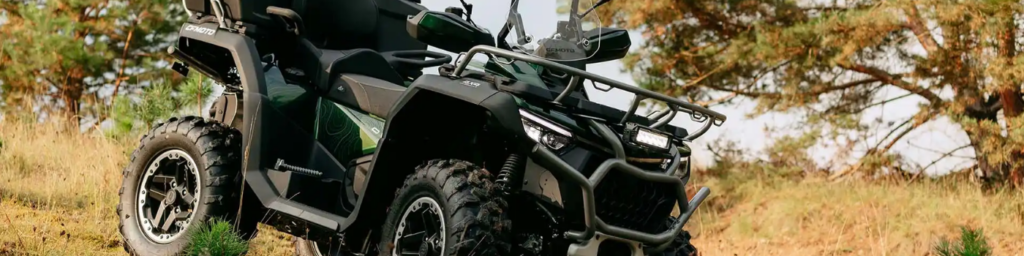
At Cutlers, we’re also a main dealer for CFMOTO ATVs and UTVs, offering a range of quad bikes and side-by-side utility vehicles. Both have their place in agricultural work, but there are some important differences when deciding which is most suitable.
CFMOTO ATVs for Farm and Estate Work
CFMOTO ATV quad bikes provide a compact option for travelling around farms, checking land and reaching locations where larger vehicles may be less convenient. Depending on the model, features such as selectable four-wheel drive, carrying racks and towing equipment can make an ATV useful for a variety of agricultural tasks.
When comparing models, it’s worth considering engine size, carrying capacity, towing limits and the terrain you’ll regularly encounter. Our CFMOTO ATV quad bikes range includes different options to suit varying workloads and requirements.
CFMOTO UTVs for Carrying Tools and Equipment
For agricultural businesses that need additional carrying space, a CFMOTO UTV may be the more practical choice. The CFMOTO UFORCE range is designed around utility work, with side-by-side seating and a rear cargo bed for transporting suitable tools, equipment and supplies.
Depending on the model, features such as tipping cargo beds, four-wheel drive and towing capability can make UTVs useful for maintenance work, moving equipment and travelling between different areas of a farm. When comparing an ATV and UTV, think about how many people need to travel, the equipment you regularly carry and whether a dedicated cargo bed would be useful.
Can You Tow a Trailer with an ATV or UTV?
Some ATVs and UTVs are designed to tow compatible trailers, but the towing capacity and approved arrangements vary between models. Always check the manufacturer’s specifications, the trailer’s weight and the suitability of the coupling before towing.
A conventional road-going trailer isn’t automatically suitable for use behind an ATV or UTV. If you’re looking for a trailer to use with one of these vehicles, it’s worth discussing the intended setup with our team.
One Versatile Trailer or Several Specialist Trailers?
For many farms, the choice isn’t simply between different trailer manufacturers. It’s deciding whether one versatile trailer can cover the work required or whether a dedicated model would be more suitable.
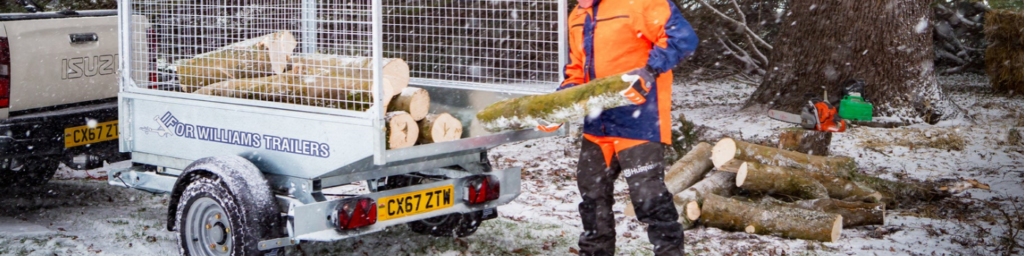
A well-chosen general purpose trailer can handle a wide variety of loads, particularly when fitted with suitable sides, ramps or other accessories. For farms that mainly transport tools, supplies and smaller equipment, this flexibility can make good practical sense.
However, some jobs call for a more specialised design.
Regular livestock transport requires a trailer designed and equipped for the animals being carried. Similarly, a dedicated tipper is likely to be more practical for repeated unloading of loose materials, while machinery transport may call for purpose-designed loading ramps and securing arrangements.
There’s no advantage in investing in several trailers if one can safely and comfortably handle your regular work. Equally, trying to make a general purpose trailer do a specialist job can introduce unnecessary compromises. Our advice is to start with the work you do most often. If one trailer can accommodate those loads safely and practically, versatility may be the deciding factor. If you’re regularly transporting livestock, machinery or heavy loose materials, a specialist trailer may be the better long-term choice.
Find Farm and Agricultural Trailers at Cutlers Sales & Hire
Whether you’re replacing an existing trailer or looking for something to handle a different type of work, choosing the right model comes down to the details.
At Cutlers Sales & Hire, we offer a range of trailers suitable for farming and agricultural use, including livestock, general purpose, utility, tipper and quad trailers. We work with established manufacturers such as Nugent, Debon and Cheval Liberte, giving customers access to a choice of designs and specifications.
As a family-run dealership based in Derby, we take a straightforward approach to helping customers find the right equipment. We can talk you through the available models, compare specifications and help you find a trailer that suits your existing machinery, towing vehicle and working requirements.
We also provide trailer servicing and repairs, so our support doesn’t have to end when you collect your trailer. Alongside our trailer range, you can explore our CFMOTO ATVs and UTVs for suitable farm and estate work. Browse our current trailers for sale, trailers for hire or get in touch with the Cutlers team to discuss what you’re looking for.